


Law Professor Talks About Why People Power Must Take Back Control of the Economy
Coverage supported by the deep donations of long-time supporters Kristin Siegesmund and Becca Brackett.

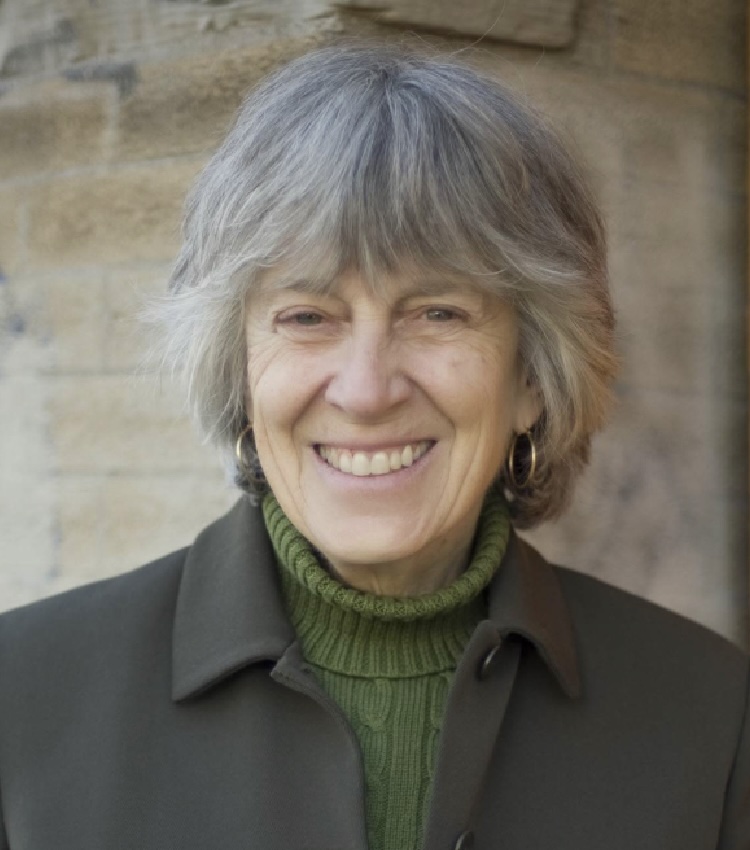
Zephyr Teachout at 2026 MN Cooperative Summit (photo by Heather Elaine Fotography)
A grieving Uber driver. A young man who died because he couldn’t afford an inhaler. A mother struggling to pay for diapers and childcare while corporate consolidation drives up costs.
These stories formed the backbone of a compelling talk from Fordham Law School professor Zephyr Teachout about how monopoly power has become one of the defining forces shaping Americans’ daily lives. Speaking at the second annual Minnesota Co-op Summit in Duluth, focused on building cooperative economies, Teachout explained how concentrated corporate power now determines everything from wages and healthcare to housing, food, and even who gets to participate in the economy.
Teachout described meeting a driver who had taken out a loan to buy his car and worked daily to earn money. Soon after his wife died, when he needed to raise funds to not only bury her but also continue to pay off his loan, he went to an event she had organized about Uber and Lyft. He was clearly agitated, broad shoulders shaking as he waited for an opportunity to speak. When he did, he shared that the company he drove for had been collecting data about drivers: when do you break, where do you stop to go to the bathroom, what time you get started in the morning, what route you take? They were using that data to control his hours of work and how much he was paid. “He had to go sit in the car every morning, waiting for the app to flicker back on, so he would have the right to work.”
In Wisconsin, a 22-year-old man — who had asthma since childhood — went to his pharmacy to fill his inhaler prescription, which normally cost no more than $66. He was told that his inhaler was no longer covered and he would need a new one, costing $539 out of pocket. As Teachout explained, a rival inhaler company had given the insurance company a kickback for sales of the new brand. The young man was told there were no generic alternatives, so he went home without an inhaler and tried to use an old emergency one. Five days later he suffered a severe asthma attack and never woke up.
“This conference is about meeting the moment, and the moment we are in is a moment where, in industry after industry across our economy, we have given a handful of people so much power that they can arbitrarily decide who gets to work and who does not, and who lives and who dies,” said Teachout.



A Typical Iron Range Story

Zephyr Teachout at 2026 MN Cooperative Summit (photo by Heather Elaine Fotography)
Teachout described a scenario for a hypothetical Iron Range new mom who works in retail. As with other supersized industry employers, the monopoly in this line of work means they can keep wage growth down. [Forbes explained it this way in 2019: “Think mining towns: When there’s only one big employer around (and no union to counterbalance them), they can hold wages below the natural level.”]
Teachout pointed out that this mom is also subject to monopolistic prices on diapers — since Proctor & Gamble and Kimberly Clark own the entire diaper industry, “they hiked up prices 33 percent during COVID because they could.” This mother might eventually be looking in Duluth for childcare, “and find that private equity is buying up the major childcare chains, cutting labor costs. Eight of the 10 largest childcare companies in the U.S. are owned by private equity.”
As the mom works to feed her child, she finds that “four companies control frozen potatoes, two control carrots, Driscoll’s is running the market on berries.” [Driscolls also is the subject in a new lawsuit about eight pesticide-linked PFAS contaminating its strawberries.]
When you send your child to school, Teachout continued, “you think, surely with the great work that Minnesota has done, you must have your school food come from the extraordinary local farms, right? Thank you, Good Acre. But it turns out that the food distribution system of schools is controlled by U.S. Foods and Cisco, who require that 80 percent of all food come from them — so those apples next door are not in your kid’s school.”
She outlined the same impact on everyday items like tampons and razors — “Procter & Gamble has spent the last 20 years buying Gillette and 28 other firms, and it uses its dominance to have insider deals with the big pharmacies and grocery stores, so new competitors can’t come in.”
When that child graduates, “The oligopoly is driving up prices so no one can buy a home. The average age of people who buy a new home is now 40.”
Nursing homes and even the death care industry are owned by private equity firms and consolidation, which increases pricing.
Teachout went on: “There are four fertilizer companies. Two companies control farm equipment. We lost almost 100 bank branches a month between 2010 and 2020; 30 percent of independent pharmacies closed; 47 family farms a day; 13 local newspapers a month. Small grocers are paying $2 more for orange juice than the big box stores, and it’s not because it’s more expensive to back up your truck to an independent store than it is to a Walmart. It’s because the WalMarts and Whole Foods demand those discounts to cause deserts to happen. I’ve talked to chicken farmers who, like the Uber driver, can get cut off from the distribution markets, because Tyson uses the data they have and decides to say no.”
“This is an outrageous and crazy way to build a society. You’re constantly on the verge of being discarded. And, of course, this is all much harder because of AI.”
Consolidating People Power
Teachout said the “most basic choice any society makes is how to organize power. And it’s a choice. There is nothing inevitable about two companies controlling diapers. That is an explicit policy choice made by the United States government, in the government of every state in this country. Everything flows from how you organize power.”
Community events and support come from small businesses, she noted, such as the Black-owned funeral homes that provided venues in the 1960s for civil rights organizing meetings. “Do you think CVS and Uber and the consolidated death care industry is going to be supporting [organizing around] boycotts?”
She noted that Justice William Douglas of the Supreme Court said about monopolies in 1948 “that power that controls the economy should be scattered into many hands, so that the fortunes will not be dependent on the whim, or caprice, or the political prejudices, or the emotional stability of a few self-appointed men. This hits pretty hard on the nose right now. BlackRock, Musk, Zuckerberg. We’re all on the verge of being removed, like that Uber driver.”
We cannot simply point to President Reagan’s policy in 1980 to deregulate, “because we keep making that decision. We made that decision in 1996 with the Telecom Act, where we said it would be a good idea to have concentrated media and immunity for what became the big tech platforms. We made a decision to concentrate media. Between 2000 and now, we have had 325,000 mergers — that’s 250 a week. The ground is shaking beneath us, and we are deciding to allow that every day. That’s a policy choice.”
Teachout said that when we allow companies like Dupont, Dow, Monsanto, Bayer, Raytheon, Verizon to own everything, it is based on the premise that “consumers want short-term cheap prices.”
Yet even with that one role, we see that the consolidation idea fails. “It’s very clear they can’t keep prices low. So, when an extraordinary technology comes along like AI, it slots into the system that we decided to build. We decided to stop enforcing antitrust law. We stopped believing in an economy where power is distributed in the hands of many people. When AI comes along, we just take it as natural that of course Google is building the chips, owns the apps, owns the data centers — which the federal government contracts with. And, of course, the same company that is now dictating AI policy in this country owns the largest television country in the station, according to Nielsen: YouTube.”
Teachout says the system we have cannot work. “It doesn’t work economically. It doesn’t work democratically. It doesn’t work spiritually.”
The Good News, Especially in Minnesota
She concluded with good news. “In the last five years, there is a new anti-monopoly movement in the country. Minnesota [with its long history of co-ops] is ground zero.”
With hospital mergers, for example, Minnesota is offering pushback to consolidation — reviewing hostile mergers. This is growing into a national movement: “81 percent of people said their most hated institution in America are corporate monopolies. The hunger is there for a new vision for the economy. Right now the anti-monopoly movement that I’m a part of has been about what shouldn’t exist, but what you’re talking about [at this conference] is what can exist in its place.”
The proposed merger between Paramount and Warner Brothers is being temporarily blocked — which is a good sign, she said. She said the people movement needs to not only stop mergers, but “also to say what kind of media environment do we want?”
The Googles and Facebooks do what government power wants, Teachout added. “They’re all doing what the federal government asks when they say, ‘Let’s take down those ICE protest groups. And videos about what is happening in Gaza.’ All of us are on the verge of being kicked off, just like that Uber driver.”
Teachout said that the Uber driver’s testimony led to a city law prohibiting Uber and Lyft from randomly cutting people off from use of the driving-for-pay app. The mother of the 22-year-old man who died of asthma is testifying in Wisconsin, working on passing a law similar to that in Arkansas that would prohibit the kind of kickbacks that Optum got. Grocers are working on a federal law so that they get a fair deal when they buy orange juice. They’re also working on a law in New York to change the rules so they have room to thrive and don’t have to deal with grocery deserts.
“The anti-monopoly movement is happening,” Teachout concluded. She said the anti-monopoly movement needs to join with the co-op movement — one of Minnesota’s nation-leading strengths. “if we take this moment, we can build something beautiful and new and resilient — a world of necessary people who aren’t scared, who are free, planting cooperatives thick as trees all across America.”
This is one of several stories from the co-op summit that we will be sharing over time.
She literally wrote the book on political corruption — Corruption in America: From Benjamin Franklin’s Snuff Box to Citizens United, published in 2014 — and after Trump won, she was one of the first to recognize what kind of Constitutional problem the president was creating by failing to divest himself from his businesses. Writing in The New York Times less than two weeks after the election, Teachout identified the “emoluments clause” — a heretofore obscure provision of Article 1 of the Constitution — as essentially an anti-bribery rule, one of several constitutional provisions written to prevent foreign powers from influencing domestic affairs. Running an international hotel and golf business essentially guarantees Trump is taking money from foreign powers, potentially giving wealthy individuals and governments leverage over presidential decisions. The emoluments clause, she argues, is a cornerstone of American democracy — one that we’d simply never needed to enforce before, because no president had chosen to retain control of a multinational company while holding office.
Minnesota Women’s Press is transitioning to the MN Press Changemakers Alliance; we need your membership support as we transition to a more formal co-op structure in 2027

Related Stories
See also our special issues about:



 For 2025 coverage, Minnesota Women’s Press earned a community leadership award, three photography awards, and four editorial awards, including for coverage of social issues and for our Spring 2025 “Know Your Rights” special section supported by Unidos MN. Our publisher was named Journalist of the Year by Violence Free Minnesota for gender-based violence coverage.
