-Advertisement-

Ecolution

Deep Dive: How the Attorney General’s Office Impacts Affordability, Housing, and Healthcare
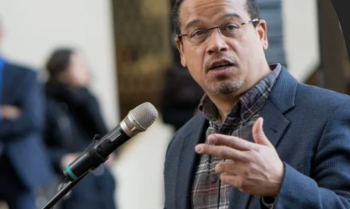
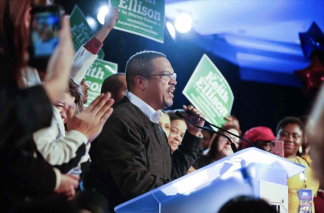
At a recent campaign rally for Attorney General Keith Ellison, Sen. Tina Smith, Rep. Ilhan Omar, and Ellison talked about several key issues impacting voters this season. Following are excerpts of the discussion, including Ellison's talking points about the economics of daily living, healthcare, housing, and other details related to how affordability is tied up in government policy and enforcement.

A Conversation About Priorities with U.S. Senate Candidate Peggy Flanagan

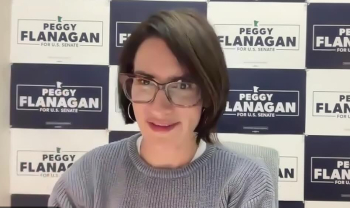
Two of our Future Forward editorial board members — a board of women under the age of 25 — had a chance to talk with Lt. Gov. Peggy Flanagan, who is running for U.S. Senate. Here is some of the conversation.

EXPLAINER: Mining in Minnesota

Minnesota has mined iron for well over a century, and it is still the largest producer of iron ore and taconite in the United States. Now the state is at the center of a bigger question: should it open a second kind of mining, for copper, nickel and other metals, in some of its most water-rich landscapes? This Explainer is part of a series designed to help people understand how the government — and the people we elect to it — serve the common good with the decisions they make about policy and funding priorities that impact the interconnected whole.

-Advertisement-

DEEP DIVE: Addressing Long-Time Issues of Fraud (updated 10-14-2026)

Fraud is historically pervasive around the country. This deep dive starts with a case involving Minnesota immigrants in the 1920s, and ends with modern-day legislation and support so the attorney general's office can increase its staff to levels comparable to other states in being able to convict more people of fraud. The office has convicted 350 people of fraud since 2019, including those involving personal-care agencies, housing services, and autism treatment programs.

Trina Swanson Explains Why She Can Win Pete Stauber’s Congressional Seat

"I went to a farmer's home in Aiken County recently. This man had voted for Trump and Pete Stauber every single time. We had an hour-and-a half–long conversation. He explained all the things he's dismayed about. I explained who I was and why I was running and what I was going to support. I left with a $3,500 check."

A Tribute to Karen Clark

The memorial service for retired Minnesota legislator Karen Clark on September 18 reiterated how much she believed that everyone can plant seeds, literally and figuratively, setting the landscape for what is to come.

AP News: House passes bill aimed at addressing impact of data centers on energy costs

The House overwhelmingly approved a bill Wednesday that aims to have artificial intelligence data centers pay for their substantial energy needs.

Truth #2: Learning From Rapid Response Lessons for the Next Crisis

A missed opportunity was protecting the right to seek health care, go to school, go to worship, go to work. “We had the ability to basically bring a lawsuit against the government, saying that because of their operation, they were freezing people who should be unaffected by your operation. ... We didn't really have the ability to gather their stories so we could put them in a petition against the government.”

Truth #3: Protecting Small Businesses and Elderly Neighbors

“In moments of crisis, people appreciate you just asking them how you are doing. As someone who has suffered from PTSD [post-traumatic stress disorder], it is important to have moments of humor, cracking a joke, simply talking to somebody that you knew for years. Just doing those things can really change a person's outlook.”

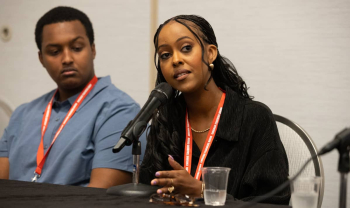
Somali Panelists Answer: What Does Home Mean to You?

"I've had so many opportunities to move — to go to school somewhere else. Every time I've traveled, I've always missed Minnesota. There's no other community that has given me a sense of belonging like here."

Commentary: What to know about the sulfide mine proposed in Minnesota’s headwaters watershed

With Talon’s proposal, Minnesota now has sulfide-mining proposals in all three of its major watersheds: the Mississippi River, Lake Superior, and the Boundary Waters. A public comment period for one of them ends September 14.

Taking Solace in the Ecofeminist Poetry of Mary Oliver

In the 1980s, ecofeminism emerged, combining feminist and environmentalist theory in the anti-capitalist assertion that the oppression of women and the oppression of the environment are strongly rooted together. Both resources have been subjected to masculine exploitation. For my capstone project at Brandeis University (where I graduated in May before returning to Minnesota), I analyzed Oliver's poetry with an ecofeminist approach.

Insights About Co-Operatives

Policymakers, Indigenous leaders, and Black collective participants discussed the long-time benefits of a collaborative, co-operative system at the Minnesota Cooperative Summit in Duluth. "Community wealth is collective."

The Long Fight Against Toxins in One Neighborhood

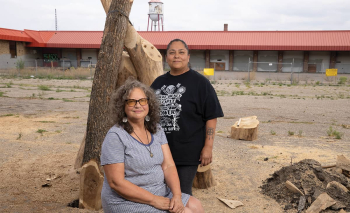
After her 16-year-old son Trinidad died in 2013 of dilated cardiomyopathy — a condition associated with exposure to air pollution — Holmes became an activist. Many people in her Indigenous community were dying before the age of 55, and she began to question what had once seemed normal.

Commentary: What is the Save Our Bacon Act in the Farm Bill?

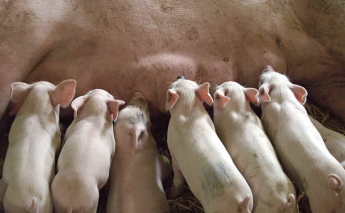
The cutesy-named "Save Our Bacon Act" was introduced in Congress in July to support large corporations to strip states of the power to set their own standards for the food sold within their borders, and to nullify laws voters have already passed to protect people and animals.