
DEEP DIVE: Addressing Long-Time Issues of Fraud (updated 10-14-2026)
A compilation of the many ways fraud has impacted people’s lives.
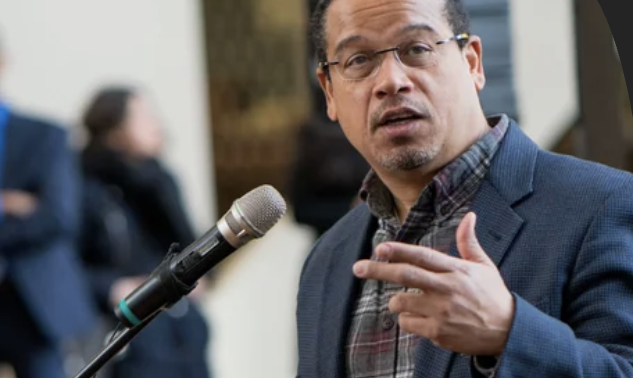
Attorney General Keith Ellison indicated at a recent campaign rally that trying to racialize the issue of Minnesota fraud is wrong. “Let me tell you, as the person who leads the Minnesota Attorney General’s Office Medicaid Fraud Unit, there are just as many Jacksons and Smiths as any other name. It’s equal opportunity bad players.”
 I recently attended a community theater production, largely featuring actors who are actual lawyers and judges, at a Landmark Center history theater production in Saint Paul called “Smooth Criminals.” The real trial for the real fraud cause took place over 50 days at the Landmark Center in 1928, when it was the Federal Court House.
In the 1920s, a Saint Paul con man named Clarence Cochran exploited the loyalty of German immigrants to build a financial empire that existed largely on paper. Clara Bergmeier, the owner of a German-language newspaper with 16,000 German immigrant subscribers, wanted to sell the newspaper. Cochran said he would buy it from her; he raised funds by selling $2 million worth of stocks and bonds to subscribers in exchange for future gold, and what turned out to be fictitious businesses.
He convinced German immigrants of modest means, through a team of salesmen, that they were investing proudly in German innovation — local plants that would make superior bricks. Over three years the team also sold to investors in Wisconsin, the Dakotas, Iowa, Missouri, and Montana. Many of the investors lost a few hundred dollars, but others lost thousands, including one who lost $14,000.
One of the sales talking points, according to typewritten notes found:
invest your money in German-American Undertakings,
not in [companies] who with your money pay the propaganda of those
who call you Huns and Barbars
Cochran’s business friendship with Andrew Nelson — a Minneapolis banker whom Gov. Theodore Christianson had appointed state securities commissioner in 1925 — enabled him to get the support needed to sell stocks, despite a criminal past.
When investors began complaining that they were not getting the return on investment promised in 18 months, Nelson, Cochran, and the lead German-speaking salesman were eventually convicted and sentenced to 20 years in prison. Nelson, however, served only two years before being pardoned by President Herbert Hoover. Cochran served only six years, eventually dying in Saint Paul in 1963.
Find a good story about this case in Ramsey County History magazine.



A Few Notable U.S. Fraud Cases
More recent cases of fraud in U.S. history do not involve imaginary companies.
PPP Loans
One of the largest fraud losses in history started during the first Trump Administration. The 2020 CARES Act enabled businesses impacted by the pandemic to apply for loans to keep payroll and other expenses paid while businesses were largely shut down and to pay unemployment to people who lost their jobs. Roughly $100 billion was stolen from COVID-19 relief programs by fraudulent players who requested loans that were not legitimate. The Labor Department reported about $87 billion in unemployment benefits could have been paid improperly, with a significant portion attributable to fraud, according to PBS. The Justice Department in 2021 “had prosecuted over 150 defendants in more than 95 criminal cases and had seized over $75 million in cash proceeds derived from fraudulently obtained Paycheck Protection Program funds, as well as numerous real estate properties and luxury items purchased with the proceeds.”
Enron

public domain image of Jeffrey Skilling
Enron, based in Houston, was a major energy company in which executives used off-the-books partnerships to hide debt while reporting inflated profits. Employees were encouraged to hold retirement savings in Enron stock even as the company’s financial problems deepened. The company eventually filed for bankruptcy in 2001. The estimated losses reached tens of billions of dollars. Arthur Andersen was the company’s auditor, eventually disclosing that employees had destroyed company documents.
Enron executives Jeffrey Skilling and Kenneth Lay were convicted of conspiracy and fraud in 2006. Arthur Andersen was convicted of obstruction of justice, although the U.S. Supreme Court later overturned that verdict. Skilling was released in 2019, having served half of his 24-year sentence, and lives in Houston. Lay died of a heart attack in 2006 while awaiting sentencing.
Worldcom
Mississippi-based WorldCom — eventually rebranded as Virginia-based MCI — inflated assets by as much as $11 billion. CEO Bernie Ebbers and other executives manipulated accounting with false entries that inflated revenues. When WorldCom collapsed into bankruptcy, about 30,000 jobs were lost. Ebbers was sentenced to 25 years for fraud, conspiracy and filing false documents. He eventually died 15 years later at home in 2020, having been released for medical reasons.
Waste Management

An award ceremony at St. Olaf College honored Dean Buntrock; read about it here
One typical case of modern-day fraud was perpetrated by publicly traded Waste Management, then based in Illinois. Executives manipulated the company’s accounting to report approximately $1.7 billion in false earnings, which went on for more than five years. Six managers were implicated, including founder Dean Buntrock — who personally earned more than $16 million from the fraudulent reporting — and president Philip Rooney — who earned more than $9 million. The objective was to “make the financials look the way we want to show them,” according to chief financial officer James Koenig.
According to the extensive 2002 complaint filed by the Securities and Exchange Commission: “Although shareholders lost billions of dollars, the defendants profited handsomely from their fraud. Between 1992 and early 1997, all of the defendants received bonuses based on the inflated earnings, were awarded stock options, and held on to their high-paying jobs. Some received enhanced retirement benefits based on the improper bonuses, some received lucrative employment contracts, and some avoided losses by cashing in their Waste Management stock while the fraud was ongoing. Just ten days before some of the accounting irregularities first became public, Buntrock further enriched himself by donating inflated Company stock to his college alma mater to fund a building in his name.”
Buntrock and colleagues admitted to no wrong-doing in the civil case. None of them — or others involved — served jail time, but were required to pay $30 million in penalties. Today, Rooney manages an investment firm. Koenig fought the charges and in 2008 lost his case; he was found guilty of committing 60 securities law violations. Buntrock paid $2.3 million, then the largest fine imposed on an individual in an SEC accounting fraud case. Auditing firm Arthur Andersen, again, assisted in the fraud and was fined $7 million.
The Buntrock Institute for Freedom and Community was later established at Saint Olaf college in Northfield, his alma mater. He had received the Horatio Alger Award in 1996, which recognizes “contemporary role models whose experiences exemplify that opportunities for a successful life are available to all individuals who are dedicated to the principles of integrity, hard work, perseverance and compassion for others.” He died in California in April 2026 at the age of 94.
Other recent cases of fraud:
- Bernie Madoff operated what became the largest Ponzi scheme in history. Investors believed they were receiving returns from legitimate investment activity. In reality, money from new investors was used to pay earlier investors.
- Wells Fargo opened accounts customers never requested
- Volkswagen manipulated emissions tests.
- Theranos falsely claimed its proprietary device could run hundreds of complex blood tests accurately and rapidly
Pardoning Fraud
As in several of the fraud cases noted above, many times the people who perpetrate fraud simply pay fines, are pardoned, or have shortened sentences. In just the last year, people pardoned by the White House have included those convicted of securities and wire fraud, Medicare and healthcare fraud, tax evasion and other financial crimes, identity theft, and campaign finance offenses.
One recent Trump pardon is Changpeng Zhao, co-founder of Binance Holdings. Trump indicated he pardoned Zhao because “he was a victim, just like I was and just like many other people, of a vicious, horrible group of people in the Biden administration.”
An NBC news analysis noted that half of President Trump’s 88 individual pardons are for white-collar offenses, especially in money laundering, bank fraud, and wire fraud. The 87 people and one corporation pardoned by Trump in the last year had been ordered to pay more than $298 million in fines and restitution; 23 individuals pardoned owed more than $100,000 each in fines and restitution. In the four years of his first term, Trump’s pardons nullified convictions that resulted in more than $276 million in fines and restitution.
Barack Obama, in his two terms as president, pardoned three people who owed more than $100,000; his pardon recipients owed $2.5 million in total. In his four years in office, President Joe Biden pardoned two people who owed more than $100,000; his recipients owed just under $700,000.
Among Trump’s recent pardons are:
- Lawrence Duran, a South Florida man sentenced to 50 years in prison for defrauding Medicare, healthcare fraud and money laundering. He filed 866,000 false claims with Medicare and received more than $87 million, according to the Miami Herald.
- Philip Esformes, whose 20-year prison sentence for a $1.3 billion Medicare fraud scheme was commuted in 2020 by then-President Donald Trump. He pleaded guilty in 2024 to a related healthcare fraud conspiracy charge and was sentenced to time served.
- Joseph Schwartz of Arkansas was three months into a three-year federal sentence for tax fraud when he was pardoned. He had failed to pay $38 million in withholding taxes for employees, did not pay insurance premiums for employees, and reportedly neglected paying for nursing home grocery bills.
Minnesota’s Most Recent Fraud Cases
During the COVID-19 pandemic, federal officials loosened some of the normal requirements governing the Federal Child Nutrition Program. For-profit restaurants were allowed to participate, and meals could be distributed outside traditional educational settings. The changes were intended to make it easier to feed children during a public-health emergency.
Feeding Our Future, a nonprofit involved in the federal nutrition program, sponsored hundreds of sites across Minnesota. According to prosecutors, people involved in the scheme created false meal counts, attendance rosters and invoices, claiming that large numbers of children were receiving meals. The nonprofit went from receiving and disbursing approximately $3.4 million in federal funds in 2019 to nearly $200 million in 2021.
Prosecutors said Feeding Our Future received more than $18 million in administrative fees to which it was not entitled, while employees received bribes and kickbacks. The case has produced dozens of criminal charges and convictions; 81 defendants have been charged. Aimee Bock, the organization’s founder and executive director, was sentenced to 41 years in prison and ordered to pay $243 million in restitution.
- In a less known case, Charles Healey and Katherin Larsen-Guthmiller defrauded the state of $22.7 million from 2021 until their Healey Homes was closed by the Minnesota Department of Human Services in 2025. The two received Medicaid reimbursements for supposedly providing support services to vulnerable adults.
- Most recently, Peter Meilahn was charged with 13 felonies related to his psychotherapy practice. Between 2019 and 2026, he reportedly submitted more than 27,000 claims for services that were not provided, resulting in more than $2.25 million in Medicaid payments.
A MinnPost article reported comments before the August primary from Amy Frederiksen, a Republican strategist and former minority leader in the state Senate, who said backlash to the fraud scandal gives Republican candidates a chance to reach new people — that the state’s Democratic leaders should have caught the fraud.
In the same article, Lt. Gov. Peggy Flanagan is quoted as saying that Republicans are disingenuous to focus on fraud in Minnesota when Trump has used the presidency to enrich himself. “They’re going to have to answer for that corruption,” she said.
Investigating State Fraud
At a recent campaign talk, Minnesota attorney general Keith Ellison said: “Fraud is a serious issue.” He said it deprives support to people with autism and disabilities, and people who are too poor to cover their own health care. Providing support to our most vulnerable neighbors, he says, “is a generous, good thing to do — that a compassionate society should do. If somebody steals from a program designed to help the poor, that is a despicable thing to do. … You better believe I’m glad I convicted them.”

Keith Ellison
The state’s Medicaid Fraud Control Unit, within the Minnesota attorney general’s office, has convicted 350 people since 2019, including those involving personal-care agencies, housing services, and autism treatment programs.
A bill provision that asked the 2026 state legislature for money to hire 18 more people to the attorney general’s Medicaid fraud investigation, until 2029, was rejected, Ellison pointed out. The team has fewer people than comparably sized states. The bill that eventually passed allocates $1.23 million to the unit, which supports only one year.
Rep. Matt Norris (D-Blaine) requested that the funding be extended through 2029 because, “I don’t know a lot of high-quality investigators and attorneys who are looking for one-year gigs. By the time these new hires get fully trained, they would maybe have a couple of months left to work on cases that oftentimes take multiple years to fully investigate and prosecute.”
Rep. Krista Knudsen (R-Lake Shore) indicated that the attorney general’s office “doesn’t need more funding. They need to get serious about their job.” She indicated that someone on trial for fraud had fled the country.
Rep. Brion Curran (D-White Bear Lake) replied that fraud is the same problem we are seeing in states across the country. “It doesn’t matter who the governor is. It doesn’t matter who the AG is. We do agree that the penalties have not been enough. We all agree that if you steal a million dollars, you owe a million dollars worth of time in the criminal justice system or to pay that restitution back. … This is a straightforward investment in fraud investigation. This isn’t a win for politicians. This is a win for Minnesota.”
Rep. Norris noted that Curran had laid out facts about effectiveness. “This office is one of the best, if not the best in the country at fighting Medicaid fraud,” he said. “So it is beyond me why we would not give them more investigators and more prosecutors to do the job that they’re already doing well when we’ve got a fraud problem here in Minnesota. So this amendment members represents a simple choice. Do we want to hire more investigators and prosecutors to fight fraud, or not. A yes vote is a vote for more investigators and prosecutors. A no vote is for the status quo.”
Rep. Steve Gander (R–East Grand Forks) said he would not vote for Norris’s extension because he’s heard from constituents who don’t trust the Attorney General’s Office.
The unit is not staffed with bipartisan or political actors, Norris replied, but by former FBI agents, former state and local prosecutors, former law enforcement, money laundering investigators and veterans. “These are people who care about one thing, and that’s justice.”
The extension of funding failed along party lines, 8-9.

graph about the budget for Medicaid fraud units taken from the Minnesota attorney general’s office
At the campaign event, Ellison said he appreciates that anti-fraud legislation did at least pass for the coming year. “Number one, it gave us more people.” He said he believes the legislation extension of years was rejected because Republicans were encouraged to vote against it. He wondered, “Are you against fraud or are you against me? … They’re using an important issue, fraud, in order to try to win an election.”
Anti-fraud laws that did pass in the Minnesota legislature in 2026 include the creation of an independent Office of Inspector General and the Medical Assistance Protection Act to crack down on state program theft. The new office will take effect on January 1, 2027, with an inspector general appointed for a five-year term with bipartisan legislative approval. The MAP Act will expand the Attorney General’s investigative power, and creates new penalty tiers for fraud over $100,000 and over $1 million, which took effect August 1.
Says Ellison, “We increased sentences for people who steal above a certain amount of money. Did you know that the state law said that if you steal from the private sector, you get a higher penalty than if you steal from the Medicaid program, so we equalized those. … We also extended the amount of time that the court can look back to recover restitution.”
The Payment Withholding Bill removes a 60-day limit on holding state payments when agencies suspect fraud, and lowers the proof needed to withhold funds to a credible, verified allegation.
Concluding Thoughts
American households lose an estimated average of $1,009 every year to online scams and cybercrimes, according to the Consumer Federation of America.
Although Minnesota ranks near the bottom (46th) on the Cato Institute’s 2025 ranking of public corruption by state, and it usually ranks near the top or above average on most other measures of financial management and good government, the Feeding the Future fraud case has become a major focus of the Republican candidates’ platforms in this election season — largely holding the governor, lieutenant governor, and attorney general responsible.
People who perpetuate fraud lead to suspicions being cast on legitimate businesses and nonprofits, fraying trust by taxpayers and investors in people who oversee those programs.
As the Landmark Center play pointed out indirectly, a century after a Minnesota man led a con game that sold worthless securities to immigrants, the country is still confronting this basic question: How do we build systems that are worthy of trust — and are strong enough not to depend on trust alone?
It requires solutions from a multiple-player process of public whistle-blowers, legislative policy, and state oversight to continue to improve on historically fallible processes of verification, oversight, transparency, internal controls, people willing to ask questions, and institutions capable of acting when warnings emerge.
Support our unique coverage:

Other Deep Dives
 For 2025 coverage, Minnesota Women’s Press earned a community leadership award, three photography awards, and four editorial awards, including for coverage of social issues and for our Spring 2025 “Know Your Rights” special section supported by Unidos MN. Our publisher was named Journalist of the Year by Violence Free Minnesota for gender-based violence coverage.

