


COMMENTARY: The Years the Locusts Ate, a Musical Evolution


Carey Marshall
My album Year of the Locust was released in October. People might assume the songs were recent. In truth, I wrote them more than a decade and a half ago, in the middle of a 20-year marriage that was quietly breaking apart.
I wasn’t blocked then. If anything, songs poured out of me like survival. I wrote late at night after my four young boys were asleep — lyrics about longing, disappointment, and faith. They were raw and real, never written for radio, but for the release of truth.
After the marriage ended, I entered a different kind of busy: single motherhood. I was raising kids, working full-time as a marketing director, and doing what every woman does when she has to keep life afloat. I put food on the table, kept the lights on, and found slivers of time to perform.
I didn’t stop being an artist; I just stopped having the luxury of focus. Still, I stayed active in music, performing across the Twin Cities. I even managed to muster a small tri-state tour over the years, bringing my 16-year-old son along. Every stage felt like a reminder that even if life had changed, the music hadn’t left me.
I released my first record, Distant Lands, in 2015 — a project that existed only because of an unexpected miracle. A stranger heard me perform, asked to meet at a coffee shop, and handed me a check for thousands of dollars to make it happen.
That once-in-a-lifetime act of generosity gave birth to an album I never could have afforded on my own. But recording another album always felt like a dream for “someday.”



“Someday” arrived in the form of a friend — someone who occasionally helps with the creative direction of my live shows. One night, he heard Year of the Locust and insisted I record it. That single moment became the spark.
It doesn’t escape me that both times that I stepped into recording an album, it was because someone else saw something in me first.
Isn’t that how we are sometimes — needing another voice to remind us of our own?
When I stepped into the studio with producer Joe Beier, I realized I wasn’t the same woman who had written these songs years ago. I was stronger. My voice had matured — emotionally and literally. The music that once came from survival now came from gratitude. Joe understood that. Together, we gave the songs a cinematic, soulful sound that honored both who I was then and who I’ve become.
The title Year of the Locust comes from a verse in the Book of Joel: “I will restore the years the locusts have eaten.”
For years, I thought restoration meant getting back what I lost — time, energy, youth. Now I see it differently. Restoration is transformation. It’s letting all the pain and waiting ferment into wisdom.
Releasing an album at the age of 50, in an industry that glorifies youth and filters, has been its own quiet rebellion. There’s something deeply satisfying about stepping into spaces that weren’t built for women my age, and refusing to apologize for being there.
At a listening event this fall, I looked out at a room full of women who had weathered their own seasons of loss and renewal. One woman told me afterward, “Watching you do this makes me think maybe I’m not too late either.”
That’s the heartbeat of Year of the Locust. It’s not a comeback album. It’s a testimony that creativity doesn’t expire; it evolves.
These days, I juggle a full life as an empty nester, working as a life coach, worship pastor, and performing artist. I’m still finding new ways to blend faith, creativity, and purpose. My husband and I are preparing to move to New Mexico to build a tiny home on ten acres of desert land with our own hands. The scenery may change, but the music — and the mission — remain the same.
The locusts may have eaten a lot, but they didn’t take the music.
Carey Marshall is a singer-songwriter, Master Certified Life Coach, and founder of Spaark Coaching. She lives in the Lake Minnetonka area with her husband, Mike, and helps women and couples rediscover identity, purpose, and connection. Her album Year of the Locust is released under her band name Fawn & the Flame.
To support our first-person narratives:

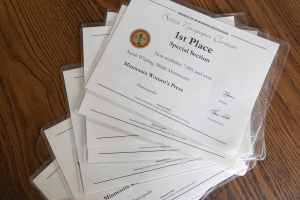 For 2025 coverage, Minnesota Women’s Press earned a community leadership award, three photography awards, and four editorial awards, including for coverage of social issues and for our Spring 2025 “Know Your Rights” special section supported by Unidos MN. Our publisher was named Journalist of the Year by Violence Free Minnesota for gender-based violence coverage.