


COMMENTARY: How Some Homeowners Are Getting Squeezed on City Land


Becky Cole
I hear stories from people who live all over the state about their experience with their homeowners associations (HOAs). In looking for resources and someone to hear them, many of them still find the Minnesota Women’s Press commentary I did in October 2021, or the follow-up in January 2024, and reach out to me because of that.
What I have learned is that no one tells people that buying into a home with a HOA often means giving up their rights with no way to defend against toxic business practices. If this was made more clear, people would not be incentivized to buy. The marketing might say that your sidewalk will be shoveled and your lawn will be mowed, but it does not tell you that an unlicensed management company or a board appointed by that company will spend your money without oversight by any regulatory authority or government agency.
I do hear “we’re not like that” from people who truly are making an effort to run their association in an appropriate, ethical manner. However, HOAs in Minnesota currently are not required to be ethical or use sound business practices. If good people step away from the board, nothing currently in the law requires the HOA to operate ethically with sound business practices.



The exploitation of homeowners is wrong. Shortly after I bought my home, the HOA raised my dues three times in 18 months; in one case, it was to pay for a shed to store bird feed for birds the DNR doesn’t recommend feeding. Recently, HOA fees paid $42,000 to pave streets we don’t own because they come under the heading of “common areas.”
HOAs are part of an arrangement that financially benefits the municipality. In short, homeowners with HOAs pay for the upkeep of property they don’t own, which takes the burden off the municipality for providing it with personal taxes we also pay. If a homeowner tries to go to the mayor or city council about financial exploitation — as has happened with more than 20 people so far who have connected with me about HOA practices — the response is often: “We don’t get involved in disputes between neighbors.”
There are times when this is appropriate, but since they are at the root of establishing these neighborhoods with CCR governance, they should be responsible for how those residents are controlled by those rules.
I have gone to the city councils on behalf of homeowners who have contacted me. When I went to my own mayor and received that response, I reminded him that the city does intervene if, for example, a neighbor doesn’t clean up dog poop. I asked him how homeowners can begin to matter as much as dog poop does.
How HOAs Are Established
HOAs are not legally required. It is a choice that results in a contract between a builder and municipality. It could be for townhome, condominium, or single family homes developments. The largest HOA in the state is in Chaska, where the Jonathan Association has over 2,300 homes and 8,000 people.
According to the U.S. census bureau, 65 percent of new single family construction in 2023 involved a HOA.
HOAs might oversee a single building that looks like an apartment complex with a common entrance, row houses or townhomes that share walls but have separate entrances, or scattered site housing where the homes are not connected. What matters is the classification that is filed as paperwork in the county. For example, in my case, we have rows of homes with shared walls that look like town homes and we are classified as condominiums.
The primary governing document is the CCR: Covenants, Conditions, and Restrictions. This is a contract between the municipality and the builder that outlines the terms and conditions that stay with the home, regardless of who purchases it. They are written before any home is built and they are about the management of the property.
The contract between the municipality and the developer establishes the basis for the association to be run as a business with the state. The purpose of the association is to enforce the CCR.
Inconsistent Management
You might find in the CCR details about what color paint a homeowner can use, but it is rare to find remedies if a board of directors is exploiting owners. For example, in my contract, it says the board is supposed to be voted into office by the homeowners, yet our board members were appointed by the management company. We are supposed to have an annual meeting every year, but went three years without one. The company controls the voting process by having a disclaimer at the bottom of the ballot telling us the ballots are destroyed after counting the ballots.
Important note: Our board chair has never been listed on the ballot.
In my case, Centex built our homes and is on the articles of incorporation filed with the state, yet Centex was bought by Pulte in 2009 and no longer builds in Minnesota. Centex filed the articles of incorporation, established the founding board of directors, then stepped aside to let the association manage the property. The CCR does not provide instructions or oversight to the conduct and business practices of the board.
One of the issues I hear often is the selective enforcement of CCR rules.
I heard from a homeowner who was threatened with a fine if she pulled buckthorn from the common property, even though she was going to do it with her own money. The board said it was their job to manage the common areas, and didn’t find it to be necessary to have it removed.
Cases have been filed in many states for embezzlement of homeowner association funds, such as a notable case in Florida involving millions of dollars. It is the board’s responsibility to ensure the association is to be run appropriately so that things like that don’t happen, but in one case I know of, the management company chose to not be transparent with the owners and assessed the owners to make up for what was stolen.
I also know the story of a homeowner near Saint Cloud, where linked properties were sold to an investor and suddenly — after not being in an association for 17 years — the city-led HOA development process required existing owners to pay dues to FirstService Residential.
The Minnesota Attorney General’s office told one of the people I work with on HOA advocacy that they have logged more than 30,000 requests for help from HOA homeowners in a two-year period, yet they indicate they can’t do anything because it involves a “private contract.” I do not understand why it is considered a “private” matter when so much is wrong with the business operations of many HOAs.
Legal Recourse
“You should know…” is a response when homeowners complain. It usually is followed by: “Because you were given the governing documents before you made the purchase.”
These documents, however, are written by lawyers in legal language, not in plain language. If you look at mine, you will not be able to point to any wording that says the board is required to be truthful, that the management company needs to have a license, and that you can lose your home for not adhering to HOA demands.
Other stories I have heard from people since I started writing about this issue include an HOA representative taking pictures of a disabled woman because the HOA was not convinced she was disabled. People have been fined for asking questions. I know a homeowner who lost their home to the HOA for failure to pay a contested $500. Renters have recourse against bullying, blackmail, and retaliation, but HOA homeowners don’t have that protection.
In my case, when I asked the board to consider changing management companies, dues from our association were used by the management company to hire a lawyer to send me a letter telling me that I am not allowed to speak to the board.
Action Steps
On my wish list for 2025:
- Create a statewide legal advocacy organization, similar to what renters have, to give homeowners help and support.
- Create a network of attorneys willing to represent homeowners.
- Create opportunities for homeowners to have contracts and other legal documents reviewed before or after they are signed.
- Create a HOME Line for homeowners, as we do for renters. I told the workgroup chair that it could easily be funded by adding $10 per month to our dues. homelinemn.org
What you can do if you are in a HOA:
- Contact your legislators, tell them your story, and keep telling them your story. There is a large trade association lobbying against homeowners with the claim that “it’s not that big of a deal.” Tell legislators that you didn’t become a homeowner so that others can financially exploit you.
- Remind your city council that you want your neighborhood to be run with sane business practices. For example, they wouldn’t hire a management company to handle their money and then not require the management company to be insured and qualified to manage the funds.
- When officials respond with “there’s nothing they can do,” remind them that doing nothing is a choice and that your story matters.
If you are thinking of purchasing in an HOA, contact me for a list of questions to ask so that you can make an informed choice on whether or not to purchase. Most classes for first-time home buyers don’t provide this information, and realtors typically aren’t required to help with determining the soundness of how the organization is run.
I have been working on these issues since 2020, including talking to Minnesota legislators to enact better regulations. I send an email at least twice a month to about 45 legislators, city council people, mayors, county commissioners and others. This email might include stories of homeowners who have reached out to me, as well as other issues, and related laws and policies that could benefit homeowners. . Many times I tell the stories for others who fear retaliation from their boards.
In 2024, the legislature finally convened a workgroup to identify gaps in laws and policies that can protect homeowners in a HOA. As of this writing, we don’t know what that will look like in 2025, but it is important for stories to be heard — two more listening sessions are planned for January in Eagan and Eden Prairie. These conversations are not about neighbors who do not get along, but about changing business practices so that homeowners who are being exploited have a say and protections.
For more information, contact me via my website: more-opportunities.com
If you appreciate the commentaries we share from readers:
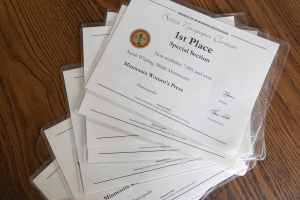 For 2025 coverage, Minnesota Women’s Press earned a community leadership award, three photography awards, and four editorial awards, including for coverage of social issues and for our Spring 2025 “Know Your Rights” special section supported by Unidos MN. Our publisher was named Journalist of the Year by Violence Free Minnesota for gender-based violence coverage.
