

What I Am Building For Homeless and At-Risk Teens, and Why

(Updated March 16, 2026)
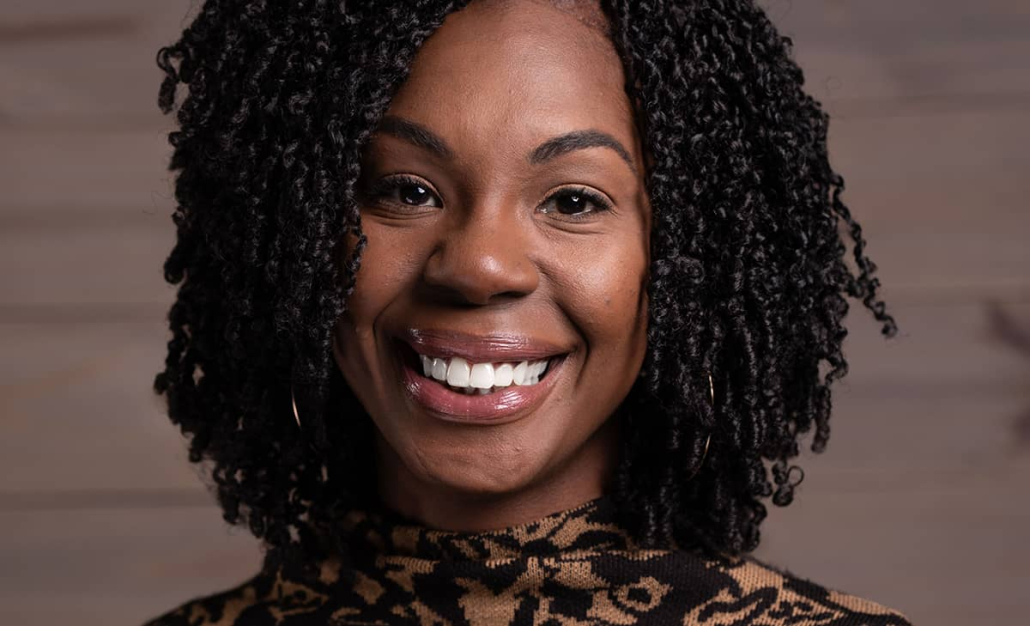
Tameeka Russell (submitted photo)
My childhood was marked by instability, poverty, and survival. I grew up in South Minneapolis with my mother and stepfather (who was married to my mother for over 10 years and was a stable presence in my early life). We moved frequently — sometimes because rent was overdue, sometimes to escape violence, sometimes for reasons I didn’t understand as a child. Home was wherever we landed, and safety was never guaranteed.
Times were rough. We were poor, dysfunctional, and just trying to get by. Both of my parents struggled with drug addiction. My brother and I were exposed to domestic violence, incarceration, and age-inappropriate situations no child should witness — like watching my stepfather jump out of a window onto a moving vehicle as my mother was driving away to flee his abuse. Our home was chaos wrapped in survival.
My biological father was nearly absent from my life. I have only vague, odd, tense encounters with him — very few and far between. It was clear my mother was protecting us from something, but we never knew what. It became an unwritten, forbidden topic like the elephant in the room that everyone ignored.



On my 14th birthday, my older brother and I moved out of my mother’s and stepfather’s house. My mother gave us the choice to stay or leave. We chose to leave. We packed our belongings, got on the city bus, and arrived at my biological father’s house.
This was supposed to be my protection, my salvation, but it became another form of instability and exposure to abuse, poverty, and incarceration. I moved between placements, carried my life in trash bags, and learned quickly not to get attached to anything or anyone because nothing ever stayed.
I gave birth to my son at 15. My son was born with a discontinuous pulmonary artery and had open-heart surgery four weeks old. At 16, my son and I moved into foster care with a family. When I arrived, I had only earned two high school credits.
The statistics told me my story was already written: I would drop out of school, cycle through poverty, maybe lose my baby to the same system that I was ensnared in. Everyone expected me to fail — not out of cruelty, but because failure was the only outcome they’d seen for girls like me.
Something in me refused to accept that script, however. Maybe it was stubbornness. Maybe it was the few people who believed I could be more than my circumstances. Maybe it was God whispering that my story wasn’t over — that it was just beginning.
I graduated high school against the odds, holding my baby and my diploma, proving to myself that I was capable of more than survival — that I was capable of transformation.
Those teenage years taught me that the world doesn’t expect much from girls who look like me, who come from where I came from. But they also taught me that resilience isn’t just about enduring pain — it’s about refusing to let that pain define your future. I learned that I could be both broken and becoming. That I could carry trauma and still build something beautiful. That my past didn’t have to be my prison.
What I Did Next
After high school, I enrolled at Hamline University in Saint Paul. I was a young, single mother navigating college with a toddler, living off student loans, working multiple jobs, and fighting exhaustion every day. There were nights I studied with my son asleep on my lap, mornings I showed up to class running on three hours of sleep, semesters I wasn’t sure I’d finish. But I kept going because education represented something foster care had stolen from me: the power to choose my own path.
Graduating from Hamline felt like reclaiming my dignity. It was proof that I wasn’t defined by what had been done to me — I could define myself. I knew I wanted to work in systems that impact vulnerable families, and I knew I needed credentials that would force those systems to take me seriously. So I pursued my Juris Doctorate at Southern Illinois University School of Law.
Law school was brutal as a single mother of three children (I had two daughters after my son). I studied while my children slept, wrote briefs while managing their school schedules, and survived on a combination of student loans, determination, and grace.
People often ask what motivated me to pursue law. The answer is simple: I wanted power. Not power over people, but power within systems — the power to advocate, to challenge, to change policies that fail vulnerable children and families. I had been on the receiving end of those systems’ failures. I knew what it felt like to be overlooked, underestimated, and disposable. I wanted to be in rooms where decisions were made about kids like I was — and I wanted a voice those rooms couldn’t ignore.
Earning my JD was one of the proudest moments of my life. I became a Licensed Child Welfare Specialist and spent over a decade advocating for vulnerable youth within the very systems that once served me. I’ve worked in child welfare, juvenile justice, and family advocacy — always carrying the perspective of someone who survived what these youth are surviving now.
The more I worked within systems, however, the more I realized that reform wasn’t enough. Youth need more than better policies — they need sanctuary. They need spaces designed by people who understand trauma from the inside. That realization planted the seed for Inspirations for Aspirations.
My Life Today
My daily life is organized chaos held together by prayer, coffee, and sheer will. I wake up early — usually before my daughters — because those quiet morning hours are when I study for the bar exam. I’m retaking it, refusing to give up on something I’ve worked so hard for. Some mornings I’m reviewing constitutional law. Other mornings I’m refining business plans for Inspirations for Aspirations, drafting emails to potential partners, or researching funding opportunities.
My son is 22 and living independently. My 16-year-old daughter is currently living with her father. My youngest daughter is 10 and lives with me. During the day, I’m juggling entrepreneurial tasks: meeting with potential board members for Inspirations for Aspirations, connecting with community partners, drafting grant applications, and building the infrastructure for a residential program that doesn’t exist yet but needs to. I’m learning zoning laws, licensure requirements, fundraising strategies, and nonprofit governance, often while sitting in my car between errands or during my daughters’ extracurricular activities.
I’m also in therapy. Healing isn’t optional for me — it’s essential. I carry complex post-traumatic stress disorder, anxiety, and depression from years of trauma. I refuse to build something for youth while neglecting my own mental health. Therapy keeps me grounded, honest, and whole. It reminds me that I can’t pour from an empty cup, and that seeking help is strength, not weakness.
Evenings are with my youngest — dinner, homework help, conversations about the day, reminders that she is loved unconditionally. Some nights we watch movies. Other nights I’m back at my laptop after she goes to bed, writing sections of my memoir, responding to emails, or researching best practices for trauma-informed residential care.
I don’t have balance — I have intention. Every choice I make is filtered through one question: Will this bring me closer to building the sanctuary I desperately needed? If the answer is yes, I find a way. If the answer is no, I let it go.
I’m packing in too much, honestly. I know that. But I also know that youth in our community are sleeping on couches, aging out of foster care with nowhere to go, and surviving trauma without support. They can’t wait for me to find balance. So I keep moving, trusting that God will sustain me and that rest will come when the work is done.
Three Important Words
Dignity means being seen as fully human — not as a case number, a statistic, or a problem to be managed. When I was in foster care, I was repeatedly stripped of dignity. My belongings were inspected. My body was examined. My choices were controlled. I was treated as less-than, as someone who needed to be fixed rather than someone who deserved to be honored.
Dignity means that every youth who walks through the doors of Inspirations for Aspirations will be treated with respect, autonomy, and inherent worth — regardless of their trauma, their mistakes, or their past. It means creating spaces where young people are seen, heard, and valued for who they are, not just who we hope they’ll become. Dignity is the foundation of healing because you cannot heal in spaces that diminish you.
Faith is what kept me alive. When everything else failed — when systems failed, when people failed, when I felt like giving up— faith whispered that my story wasn’t over. Faith wasn’t always loud or dramatic. Sometimes it was just the stubborn belief that God saw me, even when I felt invisible. It was the conviction that my pain had purpose, that my survival meant something, that I was being prepared for something greater than my circumstances suggested.
Faith is why Inspirations for Aspirations is faith-rooted, not just faith-adjacent. I’m not interested in imposing religion on anyone, but I am committed to creating spaces where spiritual wellness is honored alongside mental, emotional, and physical health. For many youth experiencing trauma, faith becomes an anchor — a source of meaning, hope, and connection to something bigger than their pain. I want youth to have access to that anchor if they choose it.
Hope is the most radical form of resistance I know. Hope says, “This isn’t the end of your story.” Hope says, “You are capable of more than survival — you are worthy of thriving.” Hope is what made me believe I could go to college as a teenage mother. Hope is what made me apply to law school when everyone said it was impossible. Hope is what makes me believe that youth who have been failed by every system can still build beautiful, meaningful lives.
Hope isn’t naive optimism; it’s a defiant belief in the face of overwhelming evidence to the contrary. It’s choosing to build something when everything in your experience says it won’t work. It’s trusting that transformation is possible, even when the odds are stacked against you.
These three values — dignity, faith, and hope — are woven into everything I’m building because they are what saved me. They are what I needed when I was 16, pregnant, and terrified. They are what every vulnerable youth deserves.
What I Am Building
Inspirations for Aspirations is a trauma-informed, faith-rooted residential program for homeless and at-risk youth ages 16 to 21 who have experienced abuse, neglect, system involvement, and housing instability. Our facility location is still being finalized. We plan to serve youth experiencing homelessness, foster care instability, and trauma. Final capacity and age ranges are being determined based on licensing requirements and community need, but our model prioritizes keeping sibling groups together and providing long-term stability.
The Model
Traditional shelters and group homes often replicate the institutional structures that traumatized youth in the first place — rigid rules, surveillance, punishment-based discipline, and an emphasis on compliance over healing. Inspirations for Aspirations is building something different:
- Trauma-Informed Care: Every staff member will be trained in trauma-informed practices that recognize how trauma manifests and avoid re-traumatizing youth. We understand that “difficult behavior” is often a trauma response, not defiance.
- Healing-Centered Approach: We’re not just addressing symptoms — we’re creating conditions for deep healing. This includes individual and group therapy, holistic wellness (yoga, mindfulness, nutrition), creative expression (art, music, writing), and connection to nature.
- Faith-Rooted (Not Faith-Required): We honor the spiritual wellness of each youth without imposing religious beliefs. Youth can access faith-based support if they choose, but our care is rooted in unconditional love regardless of religious affiliation.
- Dignity-Driven Environment: Youth will have private or semi-private rooms (not institutional dorm-style sleeping). They’ll have input into house rules, meal planning, and programming. Their voices will matter in decisions that affect them.
- Educational & Life Skills Support: We’ll partner with local schools to support educational continuity, provide tutoring, and offer life skills training (financial literacy, job readiness, college/trade school preparation).
- Community & Belonging: Youth aging out of foster care often lack family connections. We’re building chosen family — a community where youth belong, where holidays are celebrated, where graduations are honored, and where they have people who show up for them long after they leave our program.
Timeline
We’re targeting a soft launch in late 2026, pending licensure, zoning approval, and funding. I’m currently in the pre-development phase — building the board, securing fiscal sponsorship, developing partnerships, and preparing licensing applications with the Minnesota Department of Human Services.
Helpers
I’m building a board of directors with expertise in child welfare, nonprofit management, mental health, education, and faith-based community organizing. I’m partnering with:
- Ramsey and Hennepin County DCFS for referrals and collaboration
- Local schools and educational advocates for academic support
- Mental health providers for therapeutic services
- Faith communities for volunteer support and community connection
- Formerly fostered youth advocates who bring lived experience to our model
I’m also working with consultants on licensure compliance, facility design, and trauma-informed programming. This isn’t something I can build alone — it requires a community committed to youth who have been failed by every other system.
Why This Matters
Minnesota has hundreds of youth aging out of foster care every year with nowhere to go. We have teenagers sleeping in offices, on friends’ couches, in cars, or on the streets because shelter beds are full and foster homes won’t take older youth. These aren’t “bad kids” — they’re kids who’ve survived trauma and deserve more than survival. They deserve sanctuary.
Inspirations for Aspirations is my answer to the question that haunted me through foster care: Where do kids like me go when there’s nowhere safe to land? Now I’m building that place — the sanctuary I needed, designed by someone who understands what these youth are surviving because I survived it too.


 For 2025 coverage, Minnesota Women’s Press earned a community leadership award, three photography awards, and four editorial awards, including for coverage of social issues and for our Spring 2025 “Know Your Rights” special section supported by Unidos MN. Our publisher was named Journalist of the Year by Violence Free Minnesota for gender-based violence coverage.
