

FUTURE FORWARD: The Long-Term Role of Feminist Media
Coverage supported by the deep donations of long-time supporters Kristin Siegesmund and Becca Brackett.
As the longest continuously run feminist print publication in the U.S., we sent one of our Future Forward writers to cover this discussion about the role of feminist media today.

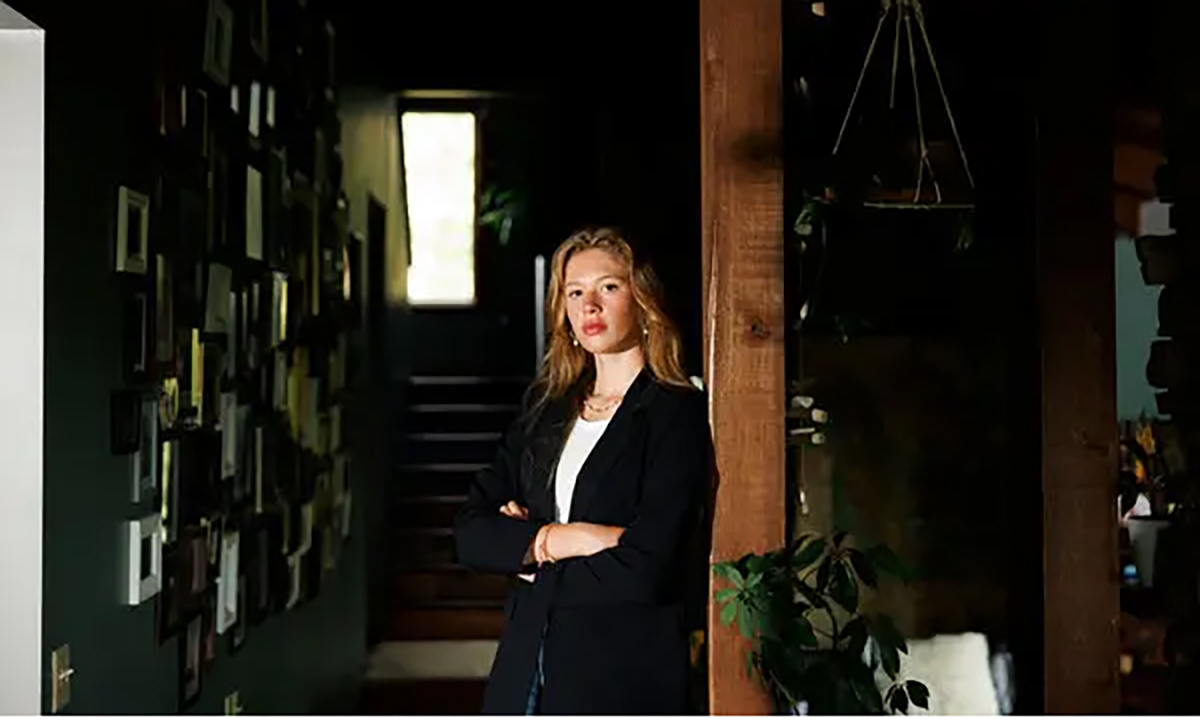
Freelance writer Amanda Week — a recent Macalester graduate — is one of the writers in our Future Forward series, focused on solutions for systemic change (submitted photo)
As part of the March Women’s History Month Speaker Series, the University of St. Thomas’s Luann Dummer Center for Women hosted a discussion between Elaine Welteroth, former editor-in-chief of Teen Vogue, and Dr. Janell Hobson, a professor of women’s, gender, and sexuality studies at the University at Albany, State University of New York. Hobson was a writer for Ms., the first national feminist magazine, founded in 1971. Moderated by MPR host Nina Moini, the conversation focused on the long-standing history of feminist voices in media and journalism’s future in today’s sociopolitical climate.
For both women, pursuing opportunities that spoke to them was essential in leading them to journalism. Welteroth said she had always wanted to be a magazine editor, but felt for a long time that she needed to put that dream on the back burner because of the competitive nature of creative fields. She looked to Harriette Cole — who worked for the Black news and culture magazine Ebony — as an inspiration. After securing a 15-minute introductory phone call with her, Welteroth was offered an opportunity to serve as her production assistant at a photo shoot, and later a summer internship that marked the beginning of her career in magazine journalism.
Hobson began her undergraduate career thinking she would study journalism, but ended up changing her major to English and eventually received her PhD in women’s studies at Emory University. She was eventually invited to participate in a writer’s workshop organized by Ms. At the time, many of its writers had studied journalism in college, but had no background in women’s, gender, and sexuality studies. Ms. leadership wanted to train people to write about feminist issues. Hobson started writing for the magazine that year, and has been part of it since.



In listening to both Welteroth and Hobson, I was most inspired by their choice to pursue journalism because they view it as a medium for shifting the narrative.
Moini posed the question of where the line exists between advocacy and journalism, to which Hobson suggested that even though some might understand the two as working towards different goals, the place where they meet is where the most ground is broken.
“I think that there’s this idea that to be a journalist, you have to be objective. … Advocacy has not necessarily rejected that, per se, so much as recognized that we’re all coming from a particular consciousness and particular perspective. If you’re open about it, you might as well advocate from that position while still being able to do objective writing … and doing it with the idea of ‘it better be something that can be revelatory about what is happening in the world as it impacts issues pertaining to women or anyone affected by gender issues,’” Hobson said.
That was the framework that led Welteroth, who served as Teen Vogue’s editor-in-chief from 2016 to 2018, to take the magazine in a more political direction. By then, Teen Vogue was regarded as a high-end teen magazine, covering fashion, beauty, and celebrity news, and Welteroth noticed an “obvious white space” when she stepped into her role — one that required the magazine to take an intersectional, feminist approach and write about social and political issues that matter to young people.
“We really didn’t think about it as influencing,” Welteroth said, “as much as we thought about it as reflecting the conversations that young people were having in real time. We saw ourselves as the container for those conversations. We wanted to mix up the kinds of conversations we were giving a platform to. We wanted to be a lot more thoughtful about who we’re handing the mic over to and making sure that we were allowing people from marginalized communities to have the mic and pen to write their own stories and perspectives.”
Teen Vogue’s shift toward political commentary helped reimagine journalism for younger audiences in ways that would encourage other publications to follow suit — but it’s important to emphasize Welteroth’s point that this move was about the magazine keeping up with the times.
I’ve often encountered the view she referred to — that young people don’t care about the issues. But the truth is that young people are socially conscious and do want to engage with what’s happening around them, including through what they read.
That is why Condé Nast’s announcement last November that it would fold Teen Vogue into Vogue was a particularly grave loss. The pivot away from social justice reporting and sweeping staff cuts — including freelance writers, who enabled the magazine to diversify its coverage with fresh perspectives — was the “wrong decision for a time like this,” Welteroth said.
I’m fortunate to find myself surrounded by people who share the same commitment to knowing and talking about what’s happening in our community, but that doesn’t lessen my fear that the media we consume will start to reflect less about the news that is unfolding around us.

Dr. Janell Hobson, Elaine Welteroth, and Nina Moini in conversation (photo by Sogol Bahremand)
Later in the discussion, Hobson described how platforms like Tumblr and Twitter have historically served as “undergrounds” of information — spaces that people turned to for authentic conversation and where many social movements were born. She said with the possible exception of Substack, no such platform exists in the present day. “Where is the new underground?” she asked the audience.
I agree with Hobson that there might not be an obvious counter-culture platform in media today, but I don’t think that necessarily means that the most pressing action is to create a new one. I understand her critique, but want to see us approach the media we interact with in a different light.
Reflecting on some of the public’s response to the transformation of Teen Vogue into a more political space, Welteroth said the magazine received significant backlash for some of its content. The editorial team embraced those discussions. “We would put something out there that would become a conversation for the community to critique and participate and engage in,” she said. This not only changed Teen Vogue’s newsroom, but also the very nature of magazine journalism to become a “two-way conversation.”
I believe that this is at the heart of good journalism: the ability to foster dialogue to provoke thought and change.
My biggest takeaway from attending this event is that the most meaningful form of engagement is the critical kind. We get the most out of the stories we read, see, and hear when we choose to actively participate in conversations about them. This invitation also ensures that news organizations are held accountable to portray narratives honestly and that their coverage reflects the questions and issues that matter to community members.
The future of journalism often seems bleak. The need to change business models, and authoritarian attacks on press freedom, are causing people to lose confidence in theability to spread information and sustain democracy.
Importantly, however, these are the pillars of feminist journalism, which has always been about:
- ensuring diversity in storytelling,
- contributing to public discourse by prompting critical questioning,
- and providing a platform for topics that often go uncovered in mainstream media.
When some people think about feminist media, they see merely another option for reading about issues. But in my view, feminist media has always been a necessary proponent and space for two-way conversations.
Now more than ever, I believe it is essential that we look to feminist media (like Minnesota Women’s Press, The 19th, and Ms.) as a key to the advocacy work journalism can and should strive to do — and one that can help draft a blueprint for reshaping media as a whole.

Related Resource
Minnesota Women’s Press publisher and editor Mikki Morrissette recently participated in a conversation about the future of community-focused media, compelled by recent attacks on press freedom and media literacy. It serves as a prelude to the vision for our transition in 2027 as a consumer-owned media co-op, related to the values of authentic grassroots journalism. Find that interview here:





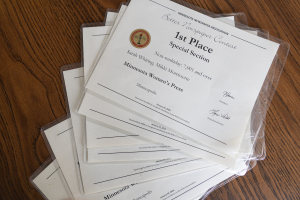 For 2025 coverage, Minnesota Women’s Press earned a community leadership award, three photography awards, and four editorial awards, including for coverage of social issues and for our Spring 2025 “Know Your Rights” special section supported by Unidos MN. Our publisher was named Journalist of the Year by Violence Free Minnesota for gender-based violence coverage.

