


The Story of Zephyr: “Being diagnosed was a revelation”

Autistic and neurodivergent individuals and their families are rarely heard in the media, at the legislature, and in general public discourse. The mission of Minnesota Women’s Press continues to be to amplify the first-person narratives of people who are not often heard in mainstream media — or are described in dismissive or inaccurate ways, as happened last week from the White House.

Zephyr James
I used to think there was something wrong with me.
Before I was an adult, I had diagnoses of major depressive disorder, generalized anxiety, and an eating disorder. Despite years of therapy, the problems stuck. I was certain that the diagnoses were symptoms of something larger — a problem with me as a person.
Sure, I excelled in school, had friends, dated, and held jobs. But underneath, I was drowning.
I didn’t know the word “masking” back then, but I lived it. On the surface I was successful, but underneath I was suppressing the needs I had that seemed different. For example, I ignored my need for routines, my communication differences, my passionate special interests, and my sensory needs.
I was too loud, too big, too blunt, so I made myself smaller. I couldn’t understand why life seemed manageable — enjoyable even — for others, while it felt like survival for me.
It was a matter of chance that I got an autism diagnosis, after I got hired at the Autism Society of Minnesota. No one had ever considered an autism diagnosis for me — which is a common experience for people who are assigned female at birth. Autism is associated with boys who love trains, and I was neither of those things. Nor did I flap my hands or melt down when routines changed.
It was after I started to gain a deeper understanding of autism — through classes, conversations, blogs, and books — that I realized autism can look like many different things.
When I quietly asked a coworker how to get evaluated, the look they gave me indicated “Finally!”



Being diagnosed was a revelation. It gave shape to a lifelong sense of otherness. It wasn’t that I was broken, but I knew I was different. My struggles weren’t failures of willpower or personality. They were the result of unsupported and valid needs.
Being diagnosed didn’t fix things overnight, but it gave me something I’d never had: a framework. I finally understood why my brain worked the way it did. It helped me to start removing the mask, which gave me permission to get support.
What really changed everything, however, was finding other autistic people.
Through work, I met people who shared my experiences. They, too, had spent years masking and struggling. They, too, had been misdiagnosed or missed entirely. They were brilliant, creative, and deeply compassionate. And they accepted me fully.
My community helped me recognize the ableism I’d internalized. I thought that asking for help made me a burden. I thought needing some special accommodations made me a failure. I allowed the fears I had for my own life to color my judgments of other disabled people: those with intellectual disabilities or more significant needs than my own.
My autistic community gave me an incredibly powerful gift: the push to be more compassionate, recognizing that every person has the right to real support and to live a life they love — including me. They taught me to have pride in my autism and joy in being with others like me.
I’m still learning how to live in alignment with who I actually am. I still slip into old habits of overworking or pushing through discomfort. But now I have language for what I’m experiencing, strategies to build the life I want, and a community that reminds me I’m not alone.


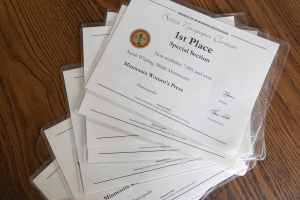 For 2025 coverage, Minnesota Women’s Press earned a community leadership award, three photography awards, and four editorial awards, including for coverage of social issues and for our Spring 2025 “Know Your Rights” special section supported by Unidos MN. Our publisher was named Journalist of the Year by Violence Free Minnesota for gender-based violence coverage.
