


We Are 1924: An Innovative Photo Project Reclaims One of Our Darkest Historical Immigration Moments
Coverage supported by the deep donations of long-time supporters Kristin Siegesmund and Becca Brackett.
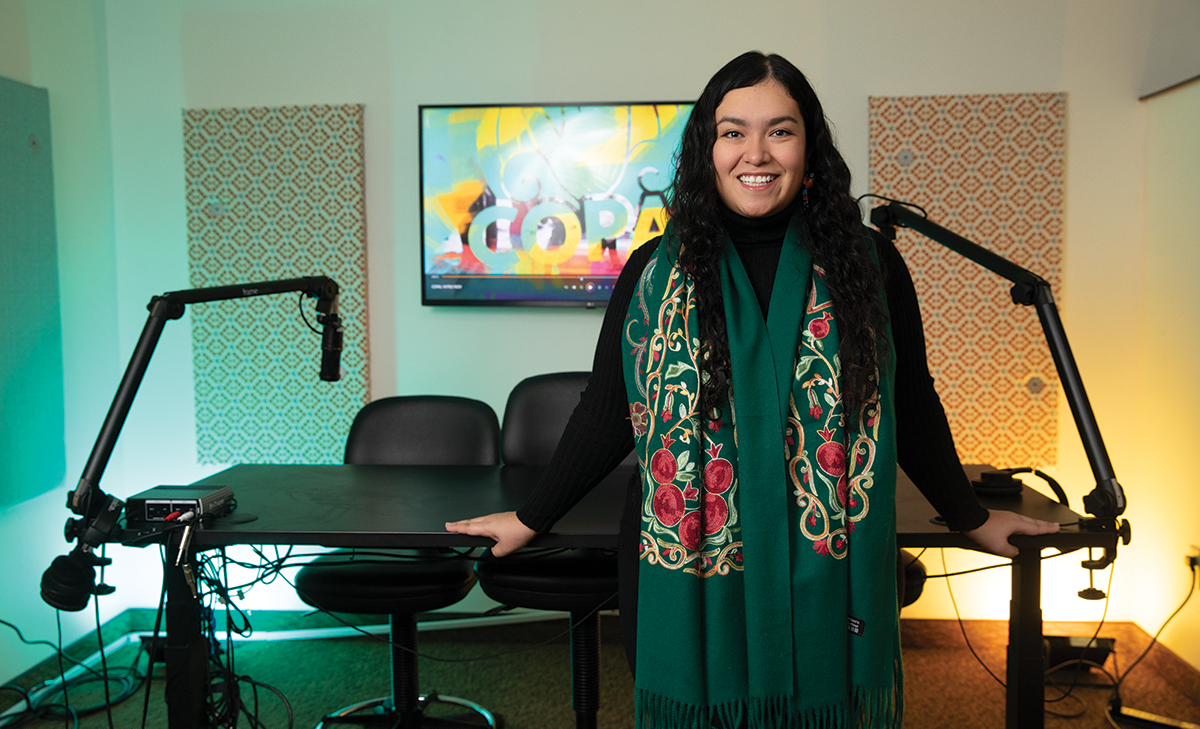
Kat (photo by @kriziastudios)
Several months ago, I stood in a sunny downtown Minneapolis photography studio where immigration narratives of survival, but also joy, resilience, and pride were being lovingly documented. It was part of the innovative immigration storytelling initiative “We are 1924,” helmed by UPRISERS, a progressive lifestyle brand melding fashion, storytelling, and community engagement. “We are 1924” commemorates the 100th anniversary of one of the darkest moments in U.S. immigration history: the Johnson-Reed Act.
The first explicitly racist immigration law in American history, the Johnson-Reed Act (also known as the Immigration Act of 1924) banned nearly all Asian immigrants, established the U.S. border patrol, and remained the law of the land for over three decades.
The Johnson-Reed Act and its blatant discrimination shaped America for much of the 20th century — and yet, in spite of it all, we remain a land of immigrants.
Collective yet personal immigrant identities are the focus of “We are 1924.” The project aims to capture 100 portraits and narratives exploring immigrant identity and pride through first-person storytelling.




Zahra (photo by @kriziastudios)
This isn’t the first time UPRISERS has disrupted harmful stereotypes or reclaimed challenging historical moments. The brand and its founder, Michelle K. Hanabusa, a fourth-generation Japanese and Okinawan American, were at the forefront of the Stop Asian Hate movement during the COVID-19 pandemic. That included coming up with the slogan “Hate is a Virus” and using storytelling and fashion to raise over $1 million.
Hanabusa said that her prior narrative and arts advocacy work informed “We Are 1924,” particularly UPRISERS commitment to working with on-the-ground grassroots partners — critical for this project, given heightened security concerns for immigrant storytellers. She was eager to push beyond the West and East Coast communities featured in prior projects. “We Are 1924” has held photo shoots in Phoenix, New Orleans, St. Louis, and Minneapolis — identified by the UPRISERS team as home to a uniquely large, growing, and diverse immigrant community.
Photographer Krizia Gaile is part of the Minnesota immigrant community and was the key creative collaborator for UPRISERS in Minneapolis. She came to Minnesota from the Philippines at age 15 and recalled uphill battles, including having to forcefully advocate to be switched from a remedial ESL class to a class appropriate for her actual abilities. She brought her insights to the “We Are 1924” project, encouraging authenticity, vulnerability, and honesty in her portraits.
Photography and fashion both involve the intentional cultivation and preservation of identity. That’s especially crucial for communities who have often been stripped of their agency to shape, preserve, and share their own stories. Both Krizia (who prefers use of her first name) and Hanabusa spoke of “We Are 1924” as an archival project, commemorating the past and present of U.S. immigration history as a testament to immigrant humanity —and a reminder to not to repeat the discriminatory mistakes of the past.

Nesreen (photo by @kriziastudios)
Krizia brought this philosophy into the Minneapolis photo shoots by inviting participants, if they wished, to wear heritage clothing or bring items with significance to their family immigration story. “We want families to have some tangible thing, even digital, to pass down and have a conversation piece that can carry to the next generation,” shared Hanabusa. “We’re on this mission of cultural preservation.”
She also wants to help generations be “reminded that our experiences matter and that we should continue to embrace our culture and be proud of it. I think that’s something me from 15 years ago would have loved to hear.”
Hanabusa added:,“I grew up in spaces where there weren’t a lot of folks who looked like me. That distance made it easy to disconnect from my own heritage. It took years — honestly, most of my adult life — to reclaim and embrace that part of myself. Now, the most meaningful part of this work for me is ‘in hopes of.’ I want more people to feel that sense of belonging and pride, to know that their heritage is something to be celebrated, not hidden. How do we build spaces — physical and digital — where people feel genuinely seen, not just included? It’s not enough to tell our own stories; we have to create platforms for others to share theirs, too. It means showing up for each other, lifting up the voices that have been silenced, and making sure the next generation grows up knowing their roots are worth honoring.”
As Krizia puts it, with few exceptions, in the United States “we are all immigrants.”
In the kind of moment we find ourselves in today, again, sharing complex, powerful, and immigrant-led stories is important.
Learn more about “We Are 1924” and support the ambitious next phases of the project.



 For 2025 coverage, Minnesota Women’s Press earned a community leadership award, three photography awards, and four editorial awards, including for coverage of social issues and for our Spring 2025 “Know Your Rights” special section supported by Unidos MN. Our publisher was named Journalist of the Year by Violence Free Minnesota for gender-based violence coverage.
