


Two Reasons We Need to Pay Attention to Elder Care Statewide


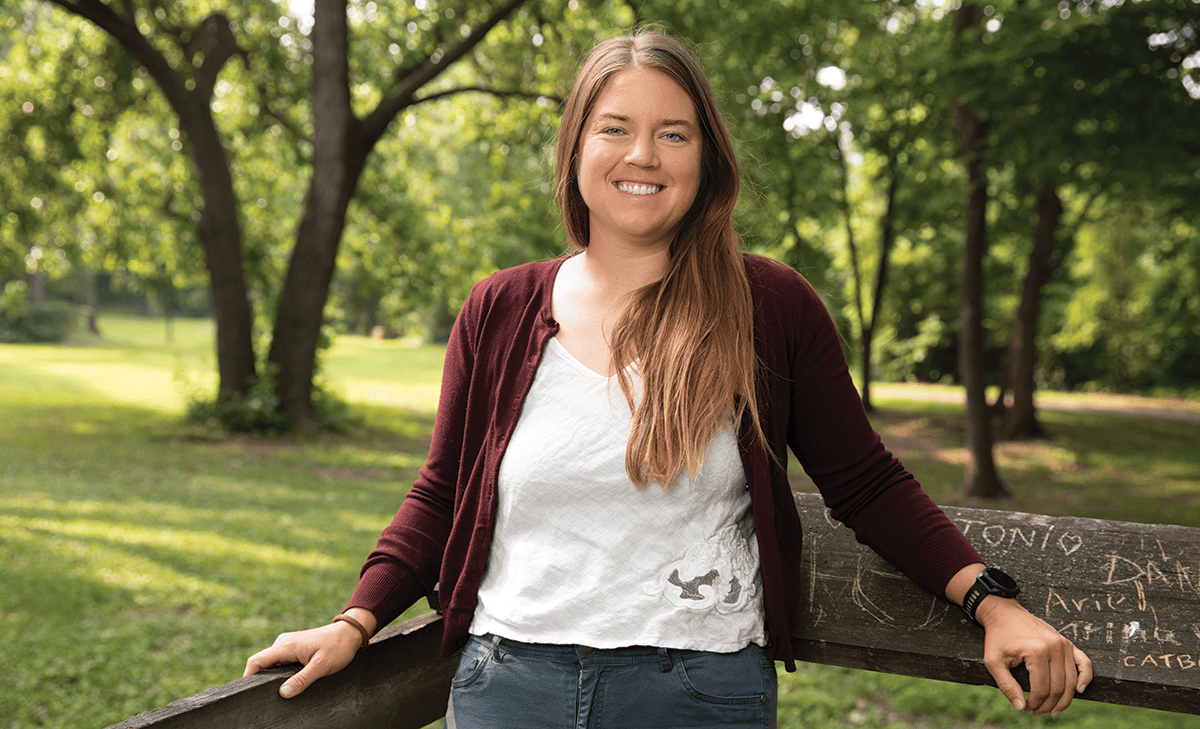
Erin Huppert. Photo LeadingAge Minnesota
Older Minnesotans, especially those in small towns and rural areas, are facing a critical shortage of skilled nursing facilities. According to a report issued by the Mankato-based Center for Rural Policy and Development, the statistics are grim:
Minnesota overall has 33 percent fewer nursing-home beds than it did in 2005.
The demand for skilled nursing beds throughout Minnesota will soar by 45 percent before 2045.
The most severe drop in the number of skilled nursing beds since 2005, at 41.7 percent, has been in “entirely rural” counties — such as Faribault County to the south, Traverse County to the east, and Kittson County in northeast Minnesota. That compares with a nearly 29 percent drop in urban counties.
A conversation hosted in November by the center and the Citizens League — which was reported in a longer story at womenspress.com — focused on the lack of acute-care housing for seniors throughout the state.
“We are an aging state. We’re getting older faster, especially in rural Minnesota,” says Erin Huppert, vice president of advocacy at LeadingAge Minnesota, a network of organizations that serves older adults.
Arguing for elected leaders to “reframe the state’s priorities,” she says LeadingAge Minnesota will continue pressing the legislature to mandate wage increases for home-health workers.



The sheer size of the Baby Boom, defined as people born between 1946 and 1964, is at the heart of the issue, says Kim Brenne, interim director of nursing facility rates and policy at the Minnesota Department of Human Services.
“We have a math problem,” she explains. “People are living longer than ever. But the workforce we’re relying on for care is shrinking. There are probably enough beds, but they’re not in the right locations.”
The oldest Baby Boomer turned 78 in 2024, and 17 percent of Minnesota’s residents are now over age 65, according to Minnesota Compass. In addition, just over half of the state’s older adults live in small-town or rural Minnesota, where the shortage of nursing-facility beds is most severe.
Demographic factors are relevant:
- At 53.6 percent, women make up the majority of older Minnesotans, according to Minnesota Compass. Women historically have earned less than men, so retirement can be harder to manage financially.
- More than 9 percent of the state’s older residents live in poverty.
- About 28 percent of Minnesotans over age 65 have one or more disabilities.
- The average annual cost of nursing-home care is $133,000 per person, said Brenner, who has worked in the field her entire career. Medicare or Medicaid often pays for such care, but reimbursements are slow and rarely cover the full cost.
- “Those reimbursement rates are set by the government,” says Kathy Messerli, executive director of the Minnesota Home Care Association. A gap between reimbursement rates and actual costs “affects salaries and wages.”

Source: Center for Rural Policy and Development report from data by Minnesota DEED Occupational Employment and Wages
Evaluations of Existing Nursing Homes
Out of 340 nursing homes in Minnesota, 148 have “serious deficiencies” uncovered during inspections, and 313 — or 92 percent — have infection-related issues. That is according to the ProPublica Nursing Home Inspect report from November 2024, whose data is now part of Elder Care IQ, a free online tool from the Minnesota-based coalition Elder Voice Advocates.
Launched in November 2022, Elder Care IQ initially drew its data solely from licensed senior care providers — including hospice facilities, hospitals, and boarding homes — from Minnesota Department of Health reports of both substantiated and unsubstantiated investigations. Complaints might include pressure sores and open wounds to more egregious mistreatment such as sexual assault or residents left lying after a fall, says Kristine Sundberg, executive director of Elder Voice Advocates and a former lobbyist and corporate communications specialist. “If we saw issues like this in child care, people would go to jail.”
At one 69-bed nursing home, for example, a resident with dementia, chronic kidney disease, and depression suffered spinal fractures after falling from a full-body mechanical lift.
One Minneapolis nursing home has been cited by the Department of Health for six substantiated and 31 unsubstantiated reports since mid-2022.
The Elder Care IQ website details the complaints as well as the health department’s investigations and resolutions. “An informed consumer can keep places on their toes and confront the provider,” Sundberg explains.
With the addition last December of the ProPublica report, Elder Care IQ now has access to nursing home data drawn from the federal Centers for Medicare and Medicaid Services. The tool provides information on fines levied, nursing turnover, nurse-to-patient staffing ratios, and more.
One facility, for example, had a 56.6 percent nurse turnover rate during a single year. That compares with a statewide nurse-turnover average of 44.8 percent.
The Elder Care IQ website indicates it is not attempting to interpret the data, merely report it. Sundberg underscores in an interview: “We take no money from the industry or the state. We are funded by individual donations, and I work for a nominal fee.”
Like several other founders of Elder Voice Advocates, Sundberg had a parent who was neglected and mistreated in long-term care. The dead body of her father lay undiscovered for seven days in a senior facility near Saint Cloud.
Sundberg’s next goal — in addition to creating an app — is to “expand the analytics” to better influence public policy. Ageism, she says, makes the tool essential. “If we had regard for our elders, this abuse and neglect wouldn’t happen.”

Source: Center for Rural Policy and Development report from data by Minnesota DEED Job Vacancy Survey

For our September issue focused on problem-solving, we will assemble a Zoom series of conversations about how to address long-standing caregiving issues in Minnesota. If you want to be part of this discussion, please contact community@womenspress.com with “Caregiving” in the subject line.




 For 2025 coverage, Minnesota Women’s Press earned a community leadership award, three photography awards, and four editorial awards, including for coverage of social issues and for our Spring 2025 “Know Your Rights” special section supported by Unidos MN. Our publisher was named Journalist of the Year by Violence Free Minnesota for gender-based violence coverage.

