


Traveling Through Books
Photo Laura Muus Photography
I recently dreamt about driving from my home in rural Minnesota to the metro airport. I anxiously calculated the drive time, fearful I would arrive too late. I stopped at a friend’s house to look at some of her picture books (as you do in a dream). I happily paged through colorful stories and organized her books. After returning to my car, I realized with horror that I would miss my flight.
My conscious brain stepped in to wake me up. I calmed myself with the knowledge that I have no pending flight scheduled, and plenty of time to linger over stories — especially since I manage Drury Lane Books in Grand Marais.



These days my favorite method of travel is by canoe and portage path. In Justine Kerfoot’s memoir Woman of the Boundary Waters, she tells of life on Gunflint Lake, starting in the 1930s, when the canoe was still used as a method of travel. In canvas-covered cedar canoes, Ojibwe families and Norwegian fishing guides would travel the lakes and paths, switching to dog sled and snowshoe in winter to follow their traplines.
For her first canoe trip, Kerfoot paddled 16 miles from Gunflint Lake down the Granite River to Saganaga Lake, a trail used by voyageurs and Native trappers throughout history. Last summer, I took the same trip in a lightweight Kevlar canoe with several friends and our daughters. I thought of Kerfoot navigating the same rapids that we did. Her clear-eyed observations make the memoir a delight to read, especially in a tent after a day of paddling.
As I write this, I’ve just started Chimamanda Ngozi Adichie’s new novel Dream Count. The main character is a travel writer. Adichie is a Nigerian American writer known for her whip-smart character observations and thought-provoking social commentary. Reading this novel, I experience Lagos, Brazil, Mauritius, and Maryland through the eyes of a wealthy Nigerian woman. The power of a good writer like Adichie is in enabling the reader to see with new eyes. Her writing also is full of humor and wry observations.
Historical fiction is my favorite kind of book travel. A recent hit at my book club was Lady Tan’s Circle of Women, by Lisa See, which transported us to 15th-century China in historical fiction inspired by the true story of Tan Yunxian, who became one of the first female physicians in the Ming dynasty.
There is one type of travel we can only experience in fiction, though we may wish it were real: time travel. The Ministry of Time, by British Cambodian debut author Kaliane Bradley, is my new favorite of this genre.
Imagine that the British government has secretly discovered how to time travel. To test its feasibility, they pluck a handful of test subjects from dangerous past time periods — such as battlefields of WWI, plague-infested London — and bring them to the present day to study the effects of time travel on the body and mind. The culture clash is immediate and hilarious, the love story is surprising, and the critique of government oversight and colonialism is satisfying. Bradley writes a thrilling plot that takes time to ask probing questions about world history.
Take time to travel to the local bookstore on your next trip. Neighborhood bookstores and libraries are a wonderful way to get to know an area. Happy travels!
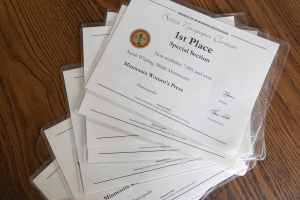 For 2025 coverage, Minnesota Women’s Press earned a community leadership award, three photography awards, and four editorial awards, including for coverage of social issues and for our Spring 2025 “Know Your Rights” special section supported by Unidos MN. Our publisher was named Journalist of the Year by Violence Free Minnesota for gender-based violence coverage.
