


Part 4: How the Hennepin County Attorney Defines Public Safety
One of the notable November 3 general election choices in Hennepin County is for a new attorney to replace retiring Mary Moriarty. The selection might come down to what philosophy voters believe has greater impact on public safety: incarceration or rehabilitation — though it is not an either/or question. We had a conversation with Moriarty this summer to define what her vision has been while in the office, and what she has learned during her process as a prosecutor rather than in her previous work life as a defense attorney.
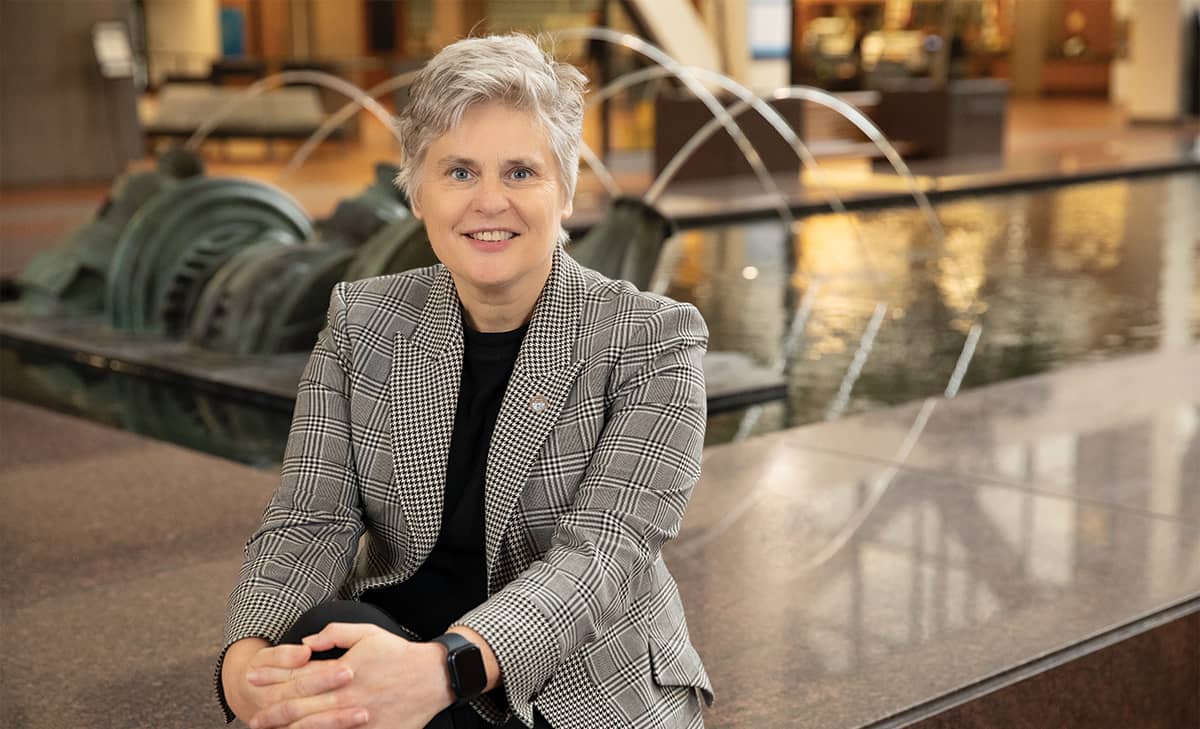
Hennepin County Attorney Mary Moriarty says research — and early local results — are reshaping how her office approaches young people accused of crimes, from teenagers involved in auto theft to emerging adults in their early twenties.
In an interview, Moriarty described what she sees as a fundamental shift away from punishment as the default response and toward interventions designed to reduce future crime. “We’re really proud of the work that we’ve done in youth,” Moriarty said. “To me, true public safety is prevention.”
We talked shortly after she had participated in a symposium with the Vera Institute of Justice and the Brennan Center for Justice that included corrections leaders, legal experts, researchers, and currently or formerly incarcerated individuals. The symposium focused on four initiatives: youth diversion, the Youth Auto Theft Initiative, a youth interrogation policy, and the county’s new Emerging Adult Unit.



Adolescent Brain Development
The Emerging Adult Unit was launched in the past year to handle cases involving defendants roughly between ages 18 and 26. The office excludes homicide and sexual assault cases from the unit, but prosecutors handling other offenses receive specialized training in adolescent and emerging adult brain development. Moriarty said the idea grew from research showing that brain development continues well beyond age 18. “We decided that we were missing opportunities to really help young people,” she said.
The office brought in a developmental expert to train prosecutors and discuss the science behind emerging adulthood. Moriarty recalled one comment from the expert that shaped the unit’s philosophy. “When you’re talking about adolescent brain development, there are no brakes,” she said. “When you’re talking about emerging adulthood, there are brakes — but sometimes they fail on a bumpy road.”
Rather than assuming prison sentences are the only answer, prosecutors are encouraged to consider what interventions could help young adults successfully return to the community. “We know everybody’s going to come back into the community,” Moriarty said. “How are they going to be successful in coming back?”
That does not mean violent offenders automatically avoid prison, she emphasized. The office still seeks incarceration in serious cases, including shootings, but prosecutors now weigh developmental science alongside public safety considerations.
Youth Tried as Adults
Moriarty said another major shift has been a dramatic reduction in certifying juveniles to stand trial as adults. While certification still occurs in exceptional cases involving repeated violent offenses, she said it has become increasingly rare.
She believes many young offenders thrive when given supervision, structure, and meaningful support rather than lengthy incarceration. “Young people almost always do great with supervision, with structure,” Moriarty said. “When they have structure, when people care about them, they thrive.”
Because of privacy laws, she cannot publicly discuss individual cases, but she said internal reports have documented numerous success stories involving youth who were diverted from prison. “I wish people could see that when you give children — essentially young people — proper supports, they do thrive,” she said.
Traditionally, diversion programs were often reserved for first-time offenders. But after researchers analyzed Hennepin County youth case data dating back to 2015, Moriarty said the office changed its approach. The research suggested many young people fare better with minimal court involvement than with formal prosecution. “The system does not help kids,” Moriarty said. “It traumatizes them. It makes it much more likely that they come back.”
Instead of treating diversion as a one-time opportunity, the county now tailors services to each child’s needs. Depending on the circumstances, youth may participate in restorative justice programs, culturally specific interventions, or community-based services.
“When I look at the data,” Moriarty said, “the recidivism rates are high for kids that we prosecute. For kids that are successful in diversion, they’re not coming back. So why wouldn’t we expand our diversion program based on that data?”
Youth Intervention
For youth at the highest risk of gun violence, the office has also invested in Youth Group Violence Intervention, pairing teenagers with “credible messenger” mentors — adults who have lived similar experiences and can build trust.
Sometimes, Moriarty said, the interventions are surprisingly simple. “One of the organizations would take them out for pizza,” she said. “They don’t have anybody to take them out for pizza or to a movie. Just things that kids like to do that they don’t get to do.”
The county has also implemented a youth interrogation policy limiting prosecutors’ use of statements obtained from minors questioned without a parent or attorney present.
Moriarty welcomed Minnesota’s new law barring prosecutors from charging children ages 10 through 12 with crimes, which took effect August 1.
The change has generated criticism from some law enforcement officials, who argue it removes an important accountability tool. Moriarty disagrees, arguing that many children in that age group are already found incompetent to stand trial after psychological evaluations. “We’re talking about children,” she said. “We’re talking about children who have needs.”
Instead of relying on criminal prosecution, she argues counties should expand treatment programs, secure therapeutic settings, and provide family support for the small number of children involved in serious violent behavior.
Throughout the interview, Moriarty returned repeatedly to a broader point: Prevention is the best public safety measure.
“I know victims who would much rather not have been victimized in the first place,” she said. “When we know there are successful things that can keep kids out of the system and help them not come back, that’s really about prevention. And that’s the best public safety.”


 For 2025 coverage, Minnesota Women’s Press earned a community leadership award, three photography awards, and four editorial awards, including for coverage of social issues and for our Spring 2025 “Know Your Rights” special section supported by Unidos MN. Our publisher was named Journalist of the Year by Violence Free Minnesota for gender-based violence coverage.
