-Advertisement-

Justice & Public Safety
News Bites: Minnesota Immigrants, ICE, and Politics
A noise demonstration is scheduled in Albert Lea Sunday on behalf of a 23-year-old man with serious health issues who has been in ICE-related detention for 14 months. And Keith Ellison updates campaign volunteers on cases against ICE agents.

DEEP DIVE: The Values of Trust, Data, and Strategy in Solving Violent Crimes

With the Minneapolis police budget under scrutiny for effectiveness commensurate with dollars spent, analysis of how Saint Paul public safety programs have been effective in some ways as a comparison, and the Hennepin County attorney election in play, I revisited notes from a conference held a year ago by the Minnesota Justice Research Center titled “Committing to Progress in Policing.”

EXPLAINER: Minneapolis Policing Budget (updated 10/15)

As Minneapolis faces proposed property tax increases amounting to 11.3 percent — alongside cuts to public services, park hours, and municipal positions — public debate has intensified over funding priorities and fiscal oversight. Mayor Jacob Frey’s proposed budget allocates $246.8 million to the Minneapolis Police Department — more than the combined budgets of the Fire, Public Works, and Health departments. Of every $1,000 in 2027 property taxes, about $223 goes to policing.

-Advertisement-

How a Biker Club Evolved Into Protest Marshals and Fundraisers

We recently talked to a few riders in a Twin Cities motorcycle club — including people named Barbie, Kassie, Bridget, Rachel, Amie, Marni, and Megan. The group is known as Bikers Riding Against Policy Brutality, and was formed to protect protestors after George Floyd was murdered by police in 2020. Today they are still engaged in marshaling at various marches, but also in fundraising and mutual aid efforts.

DEEP DIVE: How Politics Is, and Is Not, Addressing Domestic Violence and Sexual Assault

In a conversation with U.S Senate candidate Peggy Flanagan last week with members of our young Future Forward editorial board, we talked about how powerful it is for four Minnesota women to be running for the two highest offices in the state — including Governor. We also talked about the obvious misogyny we see in the highest places in U.S. government.

Truth #2: Learning From Rapid Response Lessons for the Next Crisis

A missed opportunity was protecting the right to seek health care, go to school, go to worship, go to work. “We had the ability to basically bring a lawsuit against the government, saying that because of their operation, they were freezing people who should be unaffected by your operation. ... We didn't really have the ability to gather their stories so we could put them in a petition against the government.”

Truth #3: Protecting Small Businesses and Elderly Neighbors

“In moments of crisis, people appreciate you just asking them how you are doing. As someone who has suffered from PTSD [post-traumatic stress disorder], it is important to have moments of humor, cracking a joke, simply talking to somebody that you knew for years. Just doing those things can really change a person's outlook.”

Truth #1: Truth-Telling About ICE-Related Human Rights Violations

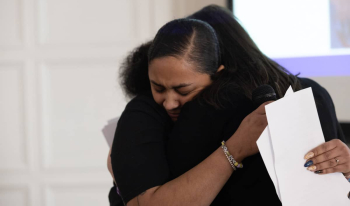
The testimony of seven people about their experiences with ICE agents during Operation Metro Surge, shared at an August National Convergence for Democracy conference held in Minneapolis.

COMMENTARY: What a Fentanyl-Free America Means to Me

"What should be prioritized in the fight against fentanyl is youth involvement prevention and education. The involvement of young people is the key to maintaining consistent awareness."

Convergence: National Conversations About Defending Democracy Held in Minnesota

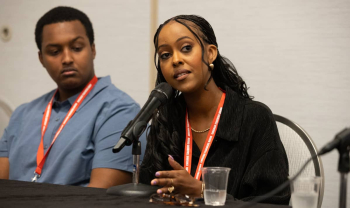
National leaders for defending democracy gathered at the Minneapolis convention center August 21 to 23, partly to talk about how Minnesotans organized to protect neighbors from federal agents, and partly to prepare for the next onslaught of federal occupation, likely related to the upcoming November elections. A central message: True power comes from cross-sector collaboration between labor, faith communities, nonprofits, and other community leaders.

The Surveillance of a Teacher

In early June, Thoreson’s work to help her community during Operation Metro Surge led to seven federal officers showing up on her front lawn. 

The Long Fight Against Toxins in One Neighborhood

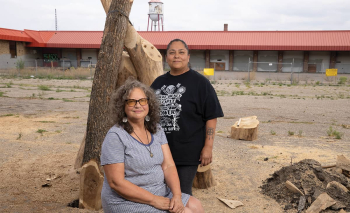
After her 16-year-old son Trinidad died in 2013 of dilated cardiomyopathy — a condition associated with exposure to air pollution — Holmes became an activist. Many people in her Indigenous community were dying before the age of 55, and she began to question what had once seemed normal.

Part 4: How the Hennepin County Attorney Defines Public Safety

"I know victims who would much rather not have been victimized in the first place," she said. "When we know there are successful things that can keep kids out of the system and help them not come back, that's really about prevention. And that's the best public safety."

Protesting Details at the Appleton Prison

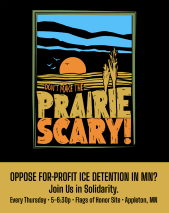
Core Civic will earn a billion dollars from the sale and subsequent contract, while we pay the bill. Not a bad scam if you can get it, likely the biggest fraud this state has ever seen.

Part 3: Exploring Community-Based Violence Intervention Programs

A panel discussion talked about how effective community-based violence intervention programs are in resolving behaviors in the long term.