


Identity Essay: Where I Am From

Heather Hauck (photo by Sarah Whiting)
I have a small yellowed newspaper clipping that is Scotch-taped across the center with torn, bent corners. Framed inside is a photo of my parents smiling with my brother’s teacher, engaged in a friendly conversation at the school’s open house. I am leaning on my mother’s leg, apprehensively looking up at the teacher.
What the photo doesn’t capture is that moments before the picture was taken, a stranger approached me and asked if I was lost. How could I be lost when I was standing right next to my parents? As a five-year-old, I didn’t have the words to articulate how this made me feel: confused, scared, maybe even anxious.
This was my earliest memory of realizing that I didn’t look white like my family or like others around me. As a transracial Korean adoptee who has white parents, the sense of not belonging is a feeling I still experience, even though Minnesota has been my home for nearly 50 years.



Like many Minnesotans, my parents can trace their family roots to parts of Europe, mainly Sweden. My great- grandmother immigrated from Sweden to Minnesota in the early 1900s. She spoke Swedish to my grandmother and her sisters at home. Like a true Minnesotan, I learned how to say uff da before the Korean equivalent aigoo. As hard as I try to embrace the Scandinavian cultural traditions of my mother’s family, it’s like that feeling when you know the dress doesn’t quite fit right, yet you buy it anyway.
Feeling like an outsider becomes even more normalized when I’m asked the intrusive question from strangers about where I am from. When I answer “Minnesota,” there is always the predictable follow-up question: No, where are you really from?
The feeling of not belonging reared its ugly head prior to my first return trip to Korea. Already consumed with imposter syndrome — of not being Korean enough because I could barely speak the language or understand the cultural references — I felt like native Koreans would judge me. I looked Korean, but I wasn’t really Korean.
This feeling intensified the first time I tried to order food in my broken survival Korean and I had to rely on Google translate. I felt embarrassed because I had been exposed as a tourist in my birth country— confirming my fears.
Maybe my internalized shame was rooted in how the South Korean government systematically exported thousands of babies. Korea’s history with international adoption started in the late 1950s after the Korean War. Instead of working toward family preservation by supporting mothers, organizations took babies from their homes. Korean women with little to no resources were coerced into relinquishing their children Many of these women were “comfort women’’ who had mixed-race babies with American military men, or they were mothers who were poor or single.

Minnesota organizations like Children’s Home Society and Lutheran Social Services facilitated many of the first Korean international adoptions. Due to Minnesota’s connection to international adoption, the state has the largest Korean adoptee population in the United States. Although Korean adoption has become more scrutinized and has declined in recent years, neither the Korean nor the U.S. government has yet to formally acknowledge their harmful past or apologize to the nearly 200,000 displaced adoptees, many of whom were given falsified documents or misled by adoption agencies about their first families.
Being a transracial adoptee has both gains and losses. I gained a loving family, but had little to no exposure to my birth culture. Growing up, I never saw Asian actors represented in mainstream television or movies. K-pop stars like BTS didn’t exist. My family didn’t eat Korean food or celebrate traditional Korean holidays. My parents never talked to me about being Korean. I was left to navigate cultural identity on my own.
From my early teens through college, I had a strong desire to just blend in. One particular Halloween, my friend and I dressed up as Madonna. As I put on my fishnet stockings and tied a big hair bow through my black hair, I looked in the mirror and thought, How can I look like a white pop star? I’m Asian. I felt entirely out of place.
I have become more confident in my identity journey by reconnecting through travel. Each trip to Korea, I feel like I’m letting go of past insecurities and reconnect more with my cultural identity. When I walk into the outdoor markets, I am fully present. I can recognize the smell of sesame-oil steam rising from the mandu cooking pots of street vendors. The intense heat of gochujang red pepper sauce dances on my tongue. There is a moving sea of black-haired people with dark-brown eyes who look like me.
It is in these moments, straddling two countries an ocean apart, that I’m able to find my footing in the in-betweenness. I have spent most of my life not feeling proud of being Korean. However, being in community with other Korean adoptees allows me to heal. I feel less alone. I am more empowered to be my authentic self.
Now, when I look at the dated black-and-white photograph of my younger self, I wonder if belonging is not about where I was born or how others perceive me. Maybe belonging is knowing that I am enough. I am a Minnesota transracial Korean adoptee who is unapologetically Korean and American.

Q&A With Friendly Vang-Johnson: Farming Advocate
“We are protectors of our community. We’re stronger together. We are trying to assert there is a different way of being. We can be a collective.”
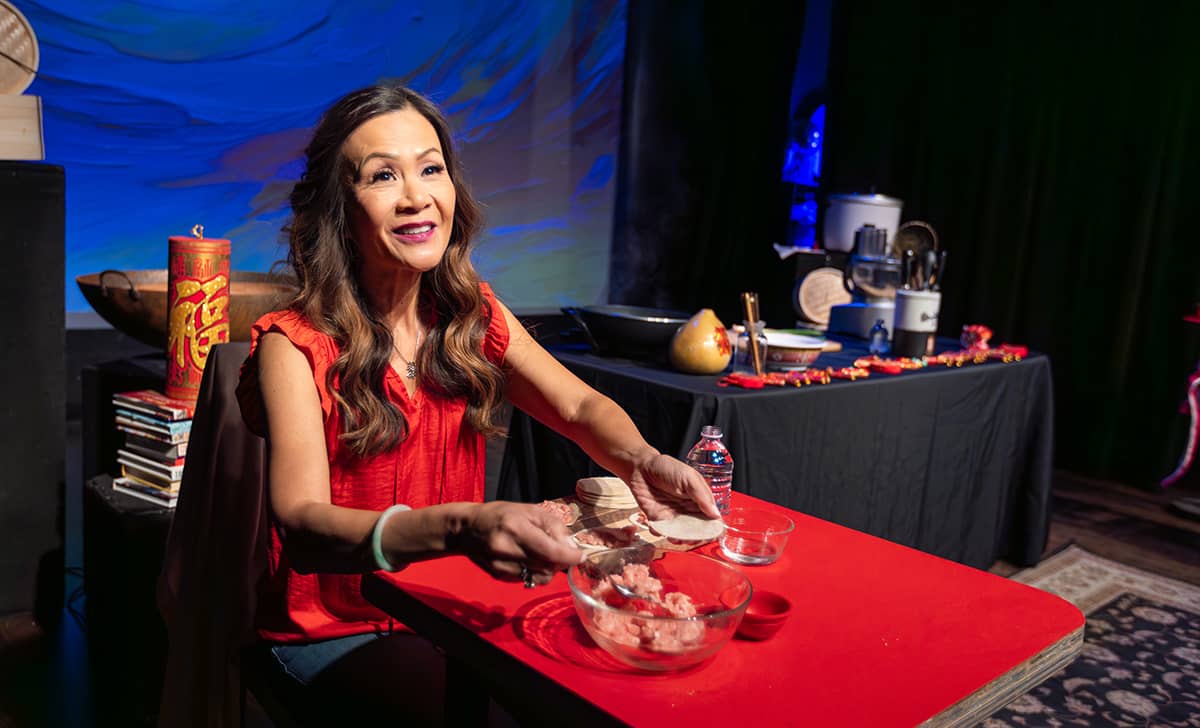
Katie Chin: Honoring Her Mother’s Legacy While Paving Her Own
“My mother seemed immortal,” Chin narrates in her show. “A kitchen warrior, who conquered every hardship with grace and determination, always at the ready to stir fry in case of emergency.”

NEWS: Minnesota Father Reunited With Family After Two Months in ICE Detention
“We believe true justice means healing harm rather than multiplying it through detention and deportation.”

Values in a Rural Town
As we grow together, we’re co-creating a mini economy that builds the basis for an emerging value system — one that doesn’t have to rest on ever-increasing consumption or outward expansion, but rather depends on a more comprehensive, deeper understanding of how we are connected.

The Caregiving Role of Immigrant Children
Anecdotes from people who are struggling with the responsibility and the privilege of being caregivers would be insightful. An online community of support would be awesome as well.

Three 20-Something Women Talk About How They See Hope
“There is unifying recognition that it’s not just about money — it’s also about social and health fabrics that need tending to. The narrative is shifting. I think people are making the dots and connections a bit more.”
 For 2025 coverage, Minnesota Women’s Press earned a community leadership award, three photography awards, and four editorial awards, including for coverage of social issues and for our Spring 2025 “Know Your Rights” special section supported by Unidos MN. Our publisher was named Journalist of the Year by Violence Free Minnesota for gender-based violence coverage.
