


Healing the Wounds of History: The Saint Paul Reparations Commission


Pilgrim Baptist Church has been Carla Robinson’s family church for over 50 years. It is the oldest African American church in Minnesota, is listed on the National Register of Historic Places, and was founded by a group of formerly enslaved people from Missouri, led by Robert T. Hickman. Photo Sarah Whiting
The legacy of 246 years of enslavement, 100 years of Jim Crow and segregation, and subsequent decades of systemic racism has left a profound mark on American Descendants of Chattel Slavery (ADOCS), creating a racial wealth gap that persists across the country.
After George Floyd’s murder in 2020, the movement for racial justice was re-ignited in Minnesota and beyond. Recognizing its role in systemic racism, the Saint Paul City Council issued a formal apology in 2021, acknowledging past injustices and laying the groundwork for reparative action. This apology set the stage two years later for the creation of the Saint Paul Recovery Act Community Reparations Commission.
Currently, the commission serves as an advisory body to the Saint Paul mayor and city council. Its mission is to repair damage caused by public and private systemic racism in the city, which resulted in racial disparities in generational wealth, homeownership, health care, education, employment, and pay, as well as within the criminal justice system.



There have long been discussions about reparations in the African American community, most notably the unfulfilled promise of 40 acres and a mule for formerly enslaved people after emancipation. There has never been a doubt in my mind that my community is owed a debt in this country. America was built on the free labor of enslaved people, while justice, equality, and the promise of the American dream have been deliberately withheld from those individuals and their descendants. The trauma and harm caused by the oppression of our ancestors have been passed down across generations, resulting in health disparities, economic hardship, and social inequities.
The opportunity to contribute to my community’s healing process through reparations — to help rebuild and restore what was taken — made me eager to apply to serve on the commission. I am honored to be part of this transformative effort as a commission member. The commission advises the mayor and city council on repairing the harm caused by systemic racism in Saint Paul, offering both short- and long-term recommendations. We hold monthly public meetings and subcommittee sessions as needed. I was appointed to a two-year term.
The commission’s work is more than policy; it is an opportunity to create a foundation of equity, healing, and empowerment for ADOCS who are residents of Saint Paul. If implemented successfully, this initiative will set a national precedent for reparative justice, demonstrating how cities can take meaningful steps toward reconciliation for past harms.
Because of this work, we were recognized in 2024 by the Economic Policy Initiative as one of the top five states in reparations task forces and truth-telling commissions.
Our work aligns with the United Nations’ five tenets of reparations:
- Repair: to restore communities harmed by systemic racism
- Restitution: to return what was unjustly taken
- Compensation: to address economic losses
- Rehabilitation: to provide care and resources for affected individuals
- Guarantees of Non-Repetition: ensuring that structural inequities are dismantled
While compensation is often the most recognized aspect of reparations, true healing requires all five pillars. Restoring wealth and well-being to Saint Paul’s ADOCS community is not just about financial restitution — it is about repairing the wounds of history and ensuring lasting change.
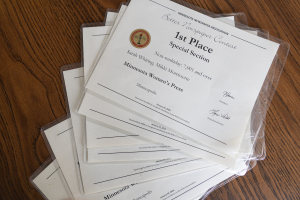 For 2025 coverage, Minnesota Women’s Press earned a community leadership award, three photography awards, and four editorial awards, including for coverage of social issues and for our Spring 2025 “Know Your Rights” special section supported by Unidos MN. Our publisher was named Journalist of the Year by Violence Free Minnesota for gender-based violence coverage.

