


Finding the Words to Make a Difference, on Mother’s Day

Liz Sjaastad with mother and daughter
It’s May. Mother’s Day. Brunches with flowers and joy. Heartfelt cards proclaiming, “the best mom ever!”
It’s a little different for me and my mom.
There is a Saturday Night Live skit in which government agents interview alien abductees. Each of them share peaceful, dreamlike experiences of being lifted into light and love. Kate McKinnon’s character jumps in, “Yeah, a little different for me.” She hilariously describes an unhinged, terrifying trip, including naughty little grey aliens with big, dumb eyes.
For me, and so many others, it is fitting that Mother’s Day shares a place on our calendars with Mental Health Awareness month.
When I was growing up, I didn’t argue with my mom about her delusions. I never said, “There are no listening devices in the walls,” or “No one implanted a micro-chip into your eye!” I knew she didn’t make sense, but I’d stopped trying to reason with her.
Mom didn’t like being questioned. Would you? Imagine someone insisting that something you know to be true isn’t. She’d get angry and less coherent. I had assumed my truth was more important than hers and that I could reach her if I just showed her how grown up and logical her daughter had become.



At the time, I didn’t have words for what was happening. One word would have helped: anosognosia. A-nō-säg-nō-zh (ē-)ə.
It refers to a condition — part of certain brain illnesses — in which a person is unaware of their own sickness. It’s not denial: it is lack of insight caused by the illness itself.
Another word: schizophrenia.
Schizophrenia is a more common word now, but it’s complicated and misunderstood, thanks in part to inaccurate media representation in news and entertainment. Schizophrenia involves a disconnection from reality, including hallucinations and delusions. A simple internet search will lead to its definition, but also its misconceptions.
Words matter. They frame experience, give us understanding, help us explain what is going on. Getting a diagnosis — however devastating — can also be a relief. Now you know. Now you’re not alone.
My childhood went by before I understood why my mom thought her food was poisoned, why she saw danger in everything, why she shuttered her world. Her delusions ruled. In it, my siblings, my dad, and I were subjects as well as suspects.
When I was an adult, a psychiatrist diagnosed Mom with schizophrenia. Suddenly, things made more sense.
Mom did not believe the diagnosis. She had anosognosia. She couldn’t see that she was ill, which made treatment nearly impossible. Since she was not an immediate threat to herself or others, no one could force her to get help.
Most people with schizophrenia and anosognosia need months of treatment before they can begin to recognize their illness, if they ever do. But our laws don’t allow that time. They protect individual rights over human rights and long-term care — unless a person becomes a clear danger. But what does that mean? Does it include refusing food when you are malnourished? Living on the streets? A projected decline?
Mom now lives in a memory care facility. Dementia eventually began to overtake her schizophrenia. This time the system responded differently. This time, society understood. She’s safe and surprisingly happy.
Severe mental illnesses that affect the brain deserve the same recognition, urgency, and compassion we give other brain diseases. Hundreds of thousands of families are caught in this painful in-between — unable to help the people they love because society still doesn’t fully understand or agree on how to help.
Words can save lives. Naming an illness or disorder cracks open a bit of silence. Stigma falls, stories rise, and the pain families carry is finally seen. It’s heartbreaking, and enraging. We owe our loved ones more: research, funding, legal changes, supportive housing.
If you’re celebrating Mother’s Day with brunch, flowers, and joy, I truly hope you cherish it.
My sister and I never had a mainstream connection with our mom. For us, and countless others, it’s a little different. We’re still learning, grieving, healing. And we’re still trying to find the words.
Liz Sjaastad is author of a new memoir titled You’re Too Young to Understand (Wise Ink, 2025).


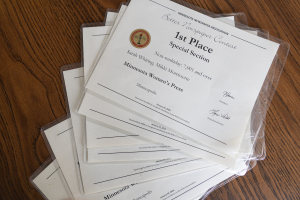 For 2025 coverage, Minnesota Women’s Press earned a community leadership award, three photography awards, and four editorial awards, including for coverage of social issues and for our Spring 2025 “Know Your Rights” special section supported by Unidos MN. Our publisher was named Journalist of the Year by Violence Free Minnesota for gender-based violence coverage.

