

SOLUTION: Designing for Safety


Comfort Dondo. Photo Sarah Whiting
As the founder of Phumulani — which helps women and children of African descent heal from trauma— I know that when someone calls our crisis line, it is not a simple call. It is layered. It is complex. It is life hanging in the balance.
We ask: “How many children do you have? How old are your sons? Who will have to leave for you to survive?”
Because in many of our families, safety comes with an impossible condition: Often, teenage sons cannot come with you to a safe space. For a mother, that is not a real choice. So, she stays to protect her children. She stays to keep her family together. She stays even when staying could cost her life.
Minnesota has a strong network of domestic violence services. And yet, many women in my community cannot access them. Mainstream shelters were built for a different reality — often a woman with one or two children. But in African immigrant and refugee communities, families are often larger and more complex. They may include extended family, children of late siblings, or multigenerational households shaped by migration and cultural responsibility.
So when these women seek help, they are often faced with a painful reality — their families do not “fit.” If safety requires separation from children, many women choose to stay in harm’s way. This is when the risk escalates. This is when we lose women.
Nationally, intimate partner violence accounts for 29 percent of all violence against women. More than 30 percent of female homicide victims are killed by their partners.



In Hennepin County, African Americans make up 12.3 percent of the population, yet account for 43 percent of clients at Domestic Abuse Project. Culturally specific domestic violence services for African immigrant communities remain extremely limited.
For immigrant women, risks are compounded by language barriers, immigration status, economic instability, and cultural expectations that prioritize family unity — even at great personal cost.
I know this reality because I have lived it. I am a survivor who almost lost my life after returning to my abuser. I returned because I had no other option that allowed me to stay with all my children.
That compromise changed me. I made a decision: I would become the solution to the gap that almost cost me my life.
Through my research and work with survivors, I have seen what happens when we get it right. Culturally specific programs provide transformation. Women who access these programs secure housing, find employment, pursue education, and rebuild their lives.
In one model program I studied, the average length of stay was 665 days — nearly two years — allowing women the time needed to truly heal and rebuild. Healing does not happen in 30 days.
In February 2026, a vision became real for a network I have been working alongside. Through partnership with federal leaders and community advocates, we purchased a safe home designed specifically for African immigrant and refugee survivors of domestic violence. It is a space where women do not have to choose between safety and their children.
In May, we will open those doors about 20 miles northwest of Minneapolis. But this is not the finish line. It is the beginning. Because one safe home is not enough. And we are not just building houses. We are building options. We are building survival into dignity. And most importantly: We are building a future where no woman has to return to violence because safety was not designed for her.
We cannot continue to cover stories like these without your support:


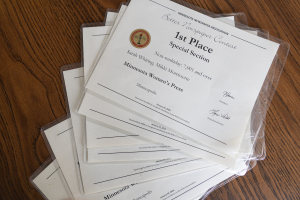 For 2025 coverage, Minnesota Women’s Press earned a community leadership award, three photography awards, and four editorial awards, including for coverage of social issues and for our Spring 2025 “Know Your Rights” special section supported by Unidos MN. Our publisher was named Journalist of the Year by Violence Free Minnesota for gender-based violence coverage.

