

Calls for Accountability After Domestic Violence Killings in Minneapolis
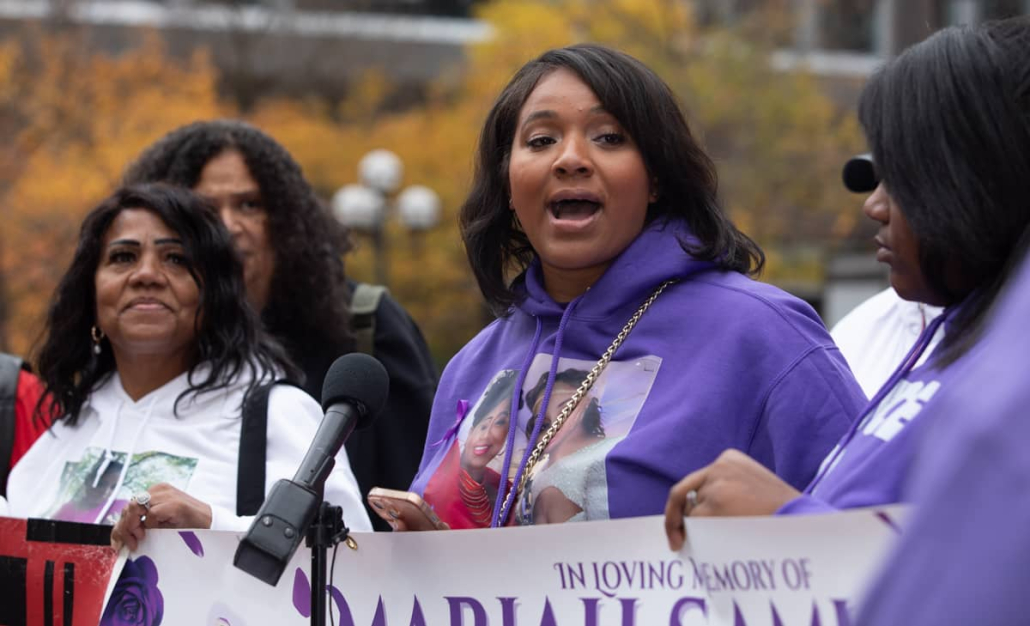
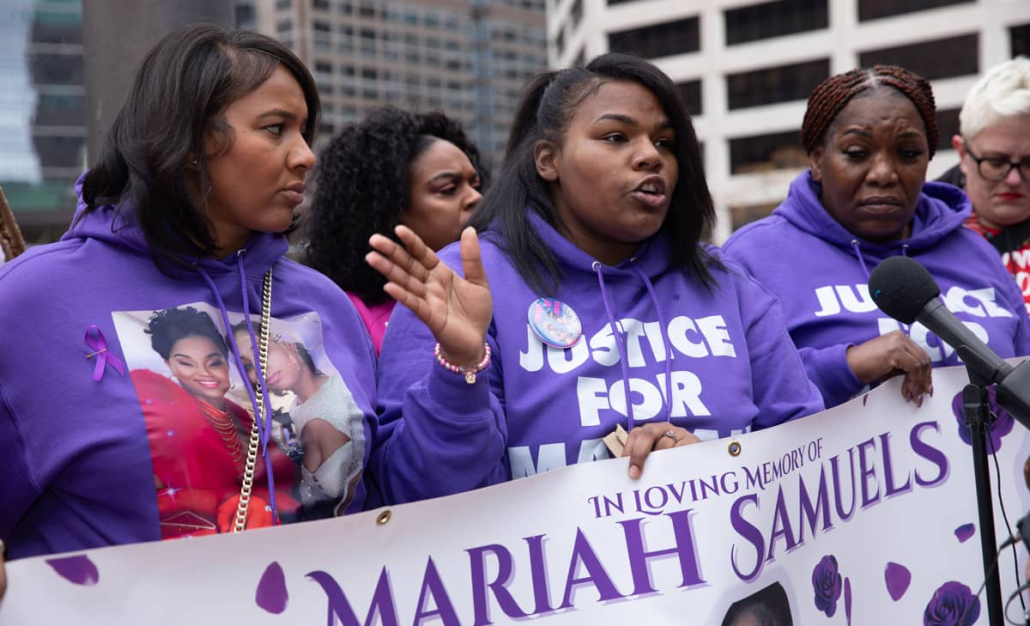
Oldest sister, Selina Owens, talks about her sister, Mariah Samuels. Photo Sarah Whiting
This story sharing made possible by the donations of Bill and Michelle Pohlad, as well as long-time supporter Kristin Siegesmund.
A Minneapolis political leader and community advocates are publicly demanding accountability, transparency, and systemic reform from city officials and the Minneapolis Police Department (MPD) following the tragic deaths of two women. Mariah Samuels and Allison Lussier were victims of intimate partner violence that community members indicate were not adequately protected by police systems, even though warning signs were evident.
A recent news conference centered on the MPD’s alleged failure to adequately investigate and respond to domestic abuse reports, including specific claims of police inaction and fabricated reports in the case of Samuels, who was fatally shot in her home.

District 2 Commissioner Irene Fernando. Photo Sarah Whiting
Critical Gaps in Samuels Case Response
Hennepin County Commissioner Irene Fernando detailed inconsistencies and failures in the MPD’s handling of Samuels’ case leading up to her murder:
- Failure to Assign Investigator: Despite an initial assault report on August 21 and Samuels obtaining an Order for Protection (OFP) on August 26, the MPD reportedly did not assign an investigator for 20 days — from August 21 until the day before her death on September 14. This delay, Fernando noted, meant police failed to act on information that Samuels’ abuser was a prohibited person potentially in possession of a firearm.
- Fabricated Police Report: On the morning of September 14, just hours before she was murdered, Samuels called 911 because her abuser violated the OFP by texting her. Reporting from the morning shows “substantial fabrications” in the police report compared to body-worn camera footage.
- The officer did not ask Samuels if she felt safe, but wrote in the report that she “appeared safe.”
- The officer wrote Samuels said her abuser would not know where she was staying, when she had “specifically stated the opposite.”
- No Lethality Assessment: The MPD failed to conduct a lethality risk assessment, a tool designed to identify victims at high risk of being killed, despite stated commitments to conduct such assessments in these situations.
- Misleading Communication: Fernando stated that an MPD Deputy Chief’s letter repeated “untrue” elements of the police report. Furthermore, while a September 24 letter asserted an investigator was assigned, Mayor Jacob Frey verbally conceded during an October meeting that an investigator was not assigned — a critical discrepancy.



Advocates Point to Systemic Invisibility of Black and Brown Women
Nikki Engel, Violence Free Minnesota co-director. Photo Sarah Whiting
Community partners echoed the need for immediate change, highlighting a broader failure of the system, particularly for women of color.
- Nikki Engel from Violence Free Minnesota emphasized that while victims are told to call the police, “that system fails domestic violence victims too often.” The failures are evident across the legal system, often leading to victims struggling with loss of privacy, long delays, and outcomes that don’t align with their safety needs.
- Artika Roller, Executive Director of Cornerstone Advocacy Service, named it: “Black and brown women are often not seen as victims.” They are “less likely to be believed, less likely to be protected, and more likely to be blamed for their abuse” due to “systematic and gender racism and gender violence.” Roller called this invisibility “deadly.”
- Amirthini Keefe, Executive Director of the Domestic Abuse Project, noted that survivors often underreport violence, meaning that when they do ask for help, “the threat of harm is real.”
Fernando expressed deep frustration with the lack of cooperation from city leadership, saying she has been unable to obtain basic data on staffing levels of domestic violence investigators at the MPD since 2019.
“If I, as a policy maker with a gavel and a title, cannot get answers, then how can I trust my residents, neighbors, and constituents,” Fernando asked. She suspects a “material decrease” in investigators, which Mayor Frey must explain if his budgets have “deprioritized victims and survivors.”

Simone Hunter talks about her sister, and says the Minneapolis police department let her die. Photo Sarah Whiting
Call to Action
Advocates presented a unified list of demands:
- Immediate release of after-action reports for Allison Lussier and Mariah Samuels.
- A public commitment from Frey to implement structural reforms that prioritize survivor safety.
- Increased resources for community-based advocates, housing, lock changes, and emergency support.
- Resources for offender accountability, including the creation of a domestic violence high-risk response team in Minneapolis.
- Implementation of recommendations from the 2023 domestic violence report.
Advocates urged: “We can honor Allison, we can honor Mariah, by doing better, by working together —to ensure that no one else is failed by these various systems that were meant to protect them.”
Lethality Assessment Program
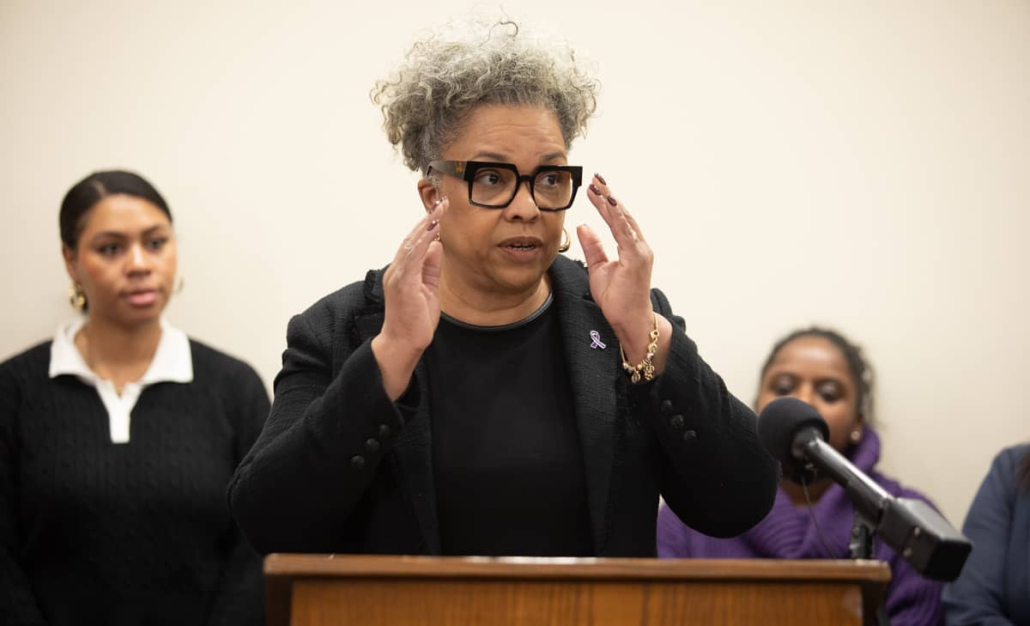
Artika Roller, executive director of Cornerstone Advocacy Services. Photo Sarah Whiting
The Lethality Assessment Program (LAP) is based on the research of Dr. Jacquelyn Campbell’s Danger Assessment tool. The LAP is a multi-step protocol designed to quickly identify victims at the highest risk and immediately connect them to life-saving resources:
- Screening: When a police officer or other trained first responder arrives at a domestic violence call, they administer a brief, standardized Lethality Screen (often 11 or 12 questions) to the victim in a private setting.
- Risk Factors: The questions cover behaviors and circumstances that research has statistically linked to a higher risk of intimate partner homicide. These factors often include:
- Has the abuser ever used a weapon against the victim or threatened them with one?
- Has the abuser ever tried to choke/strangle the victim? (This is a major indicator of high lethality).
- Does the abuser threaten to kill the victim?
- Is the abuser violently or constantly jealous or does he/she control most of the victim’s daily activities?
- Have they separated or has the victim left the abuser in the past year?
- High-Danger Identification: If the victim answers “yes” to a certain number of questions, or if they answer “yes” to one of the critical, automatically triggering questions (like use of a weapon or threats to kill), the victim is flagged as “High-Danger.”
- Immediate Referral: If a high-danger victim is identified, the officer immediately calls the local 24-hour domestic violence hotline from the scene. The victim is encouraged to speak directly with an advocate for emergency safety planning and to access services like shelter. This is a crucial step, as studies show victims are more likely to utilize services when police make the initial connection.
Why It’s Critical
The failure to conduct a lethality assessment, as described in the transcript, represents a missed opportunity to intervene because LAP:
- Identifies Hidden Danger: It alerts both the victim and the system to the true, elevated risk level that the victim may underestimate.
- Overcomes Barriers: It circumvents the tendency for high-risk victims to not reach out to an advocate on their own, by using law enforcement’s contact with the victim as a mandatory referral point.
- Informs System Response: The assessment results can be used by prosecutors and judges to argue for higher bail or stricter conditions of release for the abuser, strengthening the protective measures provided by the courts.
The core purpose is to interrupt the cycle of violence at the point of contact with law enforcement before it escalates to a fatal outcome.
Domestic Violence High-Risk Response Team
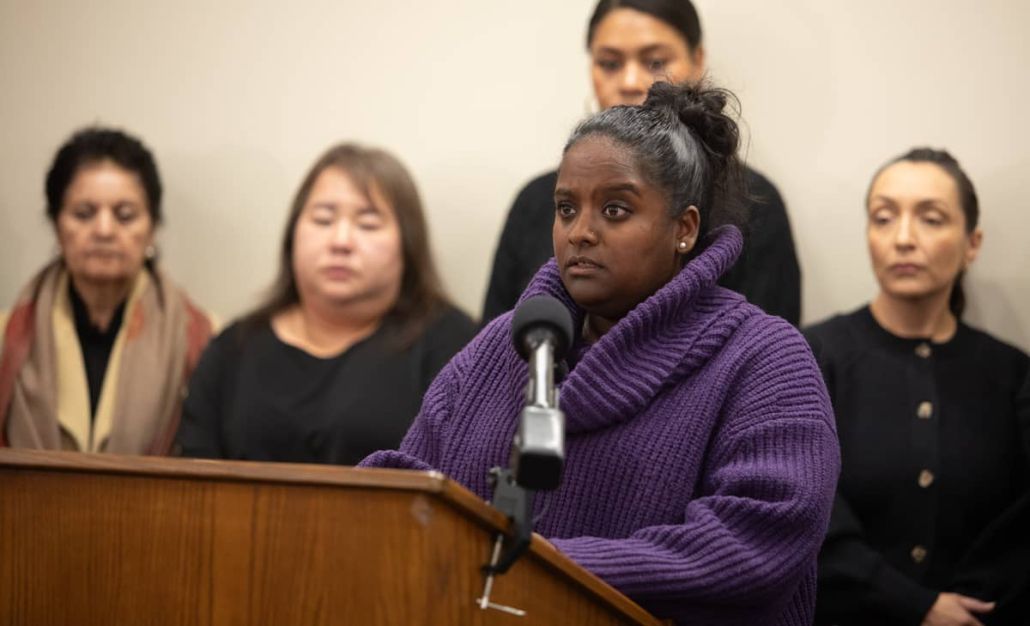
Amirthini Keefe, Domestic Abuse Project executive director. Photo Sarah Whiting
A Domestic Violence High-Risk Response Team (DVHRT) is a nationally recognized, multidisciplinary strategy designed to prevent intimate partner homicide and serious injury by focusing on the most dangerous domestic violence cases. Advocates stated that Minneapolis is one of the only major cities in Minnesota without a DVHRT, and they are pushing for the City and Hennepin County to build and fund one.
A DVHRT is essentially a specialized form of a Coordinated Community Response (CCR) to domestic violence. Its four core components work together to mitigate the highest levels of risk:
- High-Risk Case Identification
- Teams use an evidence-based risk assessment (like the Lethality Assessment Program) to consistently and quickly identify victims who face the greatest danger of being seriously injured or killed by their partners.
- Multi-Agency Coordination
- The team holds regular meetings to review newly identified high-risk cases.
- Members from different agencies share critical information (within legal and ethical limits) to create a comprehensive picture of the danger facing the survivor. This closes the systemic gaps that often occur when agencies operate in “silos.”
- Increased Survivor Safety and Support
- The team develops a proactive, individualized intervention plan for the survivor, which goes beyond standard advocacy.
- This plan involves coordinating services like emergency housing, legal advocacy, counseling, lock changes, and financial support, ensuring the survivor doesn’t have to navigate multiple systems alone. The team is usually led or co-led by a non-governmental domestic violence agency to ensure a victim-centered approach.
- Offender Monitoring and Accountability
- The team coordinates efforts to increase the supervision of high-risk abusers.
- This includes prioritizing the prosecution of high-risk cases, making informed bail and pretrial release recommendations, monitoring compliance with court orders, and ensuring swift action when violations occur.
Who Participates in a DVHRT?
A DVHRT brings together stakeholders who have information or authority over high-risk cases. Core members typically include:
- Domestic Violence agencies and victim advocates
- Prosecutors’ offices
- Law enforcement (police Departments and sheriff’s office)
- Probation and parole representatives
- Pretrial services (if applicable)
- Community health care providers
The goal is to move the system from a reactive, crisis-only response to a proactive, coordinated strategy aimed at preventing lethal outcomes. The advocates’ demand for a DVHRT in Minneapolis is based on the proven success of this model in other jurisdictions at reducing intimate partner homicide.

Jana Williams talks about the discrepancies of the newspaper story from what has been coming out, and the death of Allison Lussier. Photo Sarah Whiting
Please support our violence prevention coverage:


 For 2025 coverage, Minnesota Women’s Press earned a community leadership award, three photography awards, and four editorial awards, including for coverage of social issues and for our Spring 2025 “Know Your Rights” special section supported by Unidos MN. Our publisher was named Journalist of the Year by Violence Free Minnesota for gender-based violence coverage.
